

Stronger laws introduced for police forces using facial recognition technology
Police use of facial recognition technology will be subject to tough new safeguards under measures announced by the Home Office.
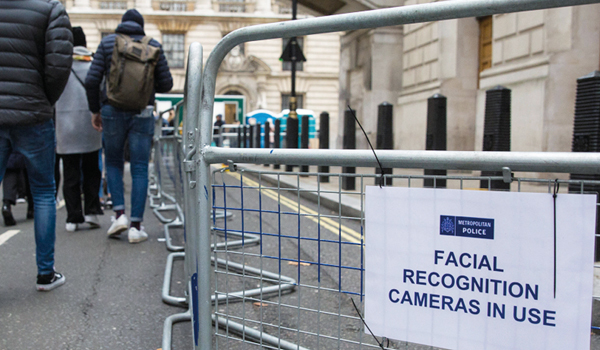
A watchdog will be created to provide independent oversight of police use of current and future technologies – and could potentially stop forces from using them if they fail to comply.
It will also be made clear that any technologies used by law enforcement must be rigorously and independently tested against bias or discrimination of age, gender or race.
A specific law will also be introduced to make clear that police use of facial recognition must be “intelligence-led and proportionate”, so it is used only when officers believe wanted people could be present in an area.
The Home Office said the changes follow a public consultation, which highlights that – while there is strong support for its use and its effectiveness in catching offenders – there is a need for stronger safeguards around the extent of its use.
Home Secretary, Shabana Mahmood, said: “Facial recognition technology has been the biggest breakthrough for catching criminals since DNA matching, already helping police take thousands of dangerous criminals off our streets.
“The benefits are clear, but we must ensure that its use is fair, safe and proportionate.
“It is right we put in place clear laws to ensure the use of this technology is watertight, so the public can have confidence that these tools, which are vital to our safety, are used responsibly too.”
Police force say facial recognition has a proven track record in taking sex offenders and rapists off the streets and tackling violence against women and girls.
Static live facial recognition cameras piloted in Croydon between October 2025 and March 2026 led to 173 arrests, including suspects wanted for rape, kidnap and sexual assault. The Metropolitan Police Service (MPS) reported a 10.5 per cent drop in overall crime in the area against the previous year, and a 21 per cent decrease in offences linked to violence against women and girls.
Facial recognition technology has also been used to support police in managing registered sex offenders in the community. At this year’s Notting Hill Carnival, police used the technology to stop 86 registered sex offenders, leading to the arrest of seven offenders who were found to be in breach of civil orders or notification requirements.
Al Murray, Director of PoliceAI, said: “Facial recognition technology is one of a number of proven capabilities that can help policing work more effectively to keep the public safe. Used responsibly, technologies like this can help officers identify wanted offenders more quickly, make better use of available information and focus more time on protecting victims and communities.
“The benefits of technology adoption are greatest when innovation is matched by strong safeguards, transparency and public accountability. We welcome the Government’s commitment to providing a clearer framework for the use of facial recognition, helping forces adopt technology consistently, responsibly and with the confidence of the public they serve.”
While there are already legal requirements in place for facial recognition, the Home Office said they are set out across a “vast patchwork system and in need of a clear, consistent set of laws”.
The new independent watchdog will advise on standards, provide scrutiny and make recommendations to ministers on emerging technologies and risks. In extreme cases where forces fail to comply with regulations, it can pursue enforcement action, which could see them handed a court injunction preventing them from using these technologies.
In consultation with this new regulator, the Government will develop a new legal Code of Practice for police to set clear standards and rules that all forces must abide by.
In addition, a separate legal Code for the private sector will be developed to make sure that businesses using facial recognition to tackle crime, including shops, are using it responsibly and complimentary to law enforcement efforts.
The measures announced on Wednesday (November 4) follow an £11 million investment to triple the number of live facial recognition vans available to police forces in England and Wales.
Neil Basu QPM, former head of Counter Terrorism Policing, said: “Live facial recognition is a massive step forward for law enforcement – a digital 21st century step change in the tradition of fingerprints and DNA.
“Like all new technologies, live facial recognition had a difficult start and the consultation was absolutely necessary to ensure this new technology was acceptable to the wider public.
“With a real police officer making the final decision a human one, and with the proper legal safeguards and independent oversight in place, I have no doubt LFR will catch many more criminals and make us all much safer.”
Dal Babu, former chief superintendent at the MPS, added: “Safe use of facial recognition is a valuable tool for effective policing. I am therefore pleased to see significant and meaningful engagement with the public to ensure public confidence its use to protect communities and arrest criminals. I therefore strongly welcome these commitments from the Government.”
The Home Office said it has independently tested a new algorithm for retrospective facial recognition that has proved to be “highly accurate and without bias”, which will be available for police forces to roll out from next year. The algorithm used for the live facial recognition vans has already been independently tested.
Sue Daley, Director of Tech and Innovation at techUK said: “Facial recognition is a powerful technology that offers real opportunities for law enforcement, but it’s right that the public’s concerns are properly addressed.
“As set out in our consultation response earlier this year, our members support clear, consistent regulation for this technology. This will be crucial to establish and maintain public support in the long-term. We look forward to continuing our work with the Home Office to make that happen.”
Nuala Polo, UK Public Policy lead at the Ada Lovelace Institute, said the new measures were a “significant moment”.
“The Government has committed to the kind of governance regime that we and many others have called for since the Court of Appeal’s judgment in 2020,” she said.
“The announcement reflects years of work by parliamentarians, academics, legal experts, civil society organisations, campaigners and individual litigants. We are proud to have contributed through our research and public engagement.
“In 2020 we commissioned Matthew Ryder KC to conduct an independent legal review of the governance of biometric data in England and Wales, and convened the Citizens’ Biometrics Council so that public perspectives could inform the debate. We subsequently published policy papers in 2022 and 2025 calling for independent statutory regulation of biometric technologies.
“We welcome the announcement of the Bill and Codes of Practice. However, the rhetoric of safeguards sits starkly at odds with increasingly contentious deployments by police forces, such as at protests and for non-criminal compliance.
“The Bill will need to set a clear legal threshold for the seriousness of crimes that facial recognition can be used for, so that we don’t drift into using this powerful technology in harmful and disproportionate ways. It’s also vital that the proposed code of practice for private use is mandatory; there should be a very high bar outside of law enforcement bodies for scanning the public’s faces.”
Simon Randall, CEO of visual data privacy company Pimloc, said: “The Home Office’s facial recognition consultation raised important questions about how police protect the privacy of people of innocent bystanders, and the Government is right to bring a wider range of visual AI technologies under statutory oversight.
“But promising safeguards isn’t the same as spelling them out. The Government has yet to explain who can access the data, how it can be shared or reused, and how long it can be kept. Until those limits are clear, it’s difficult to see how the promised safeguards will work in practice.”