

PSNI stop and search hits 20-year low
Use of stop and search powers by the Police Service of Northern Ireland has fallen to its lowest level since records began two decades ago, according to a new inspection report.
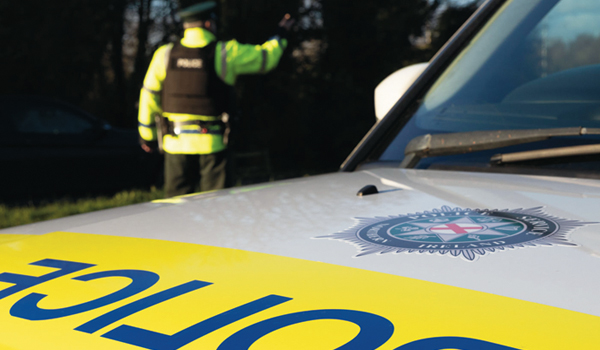
Figures published by the Northern Ireland Statistics and Research Agency show PSNI officers carried out 18,096 stop and searches in the year to 31 March 2025, a fall of 28 per cent on the previous year. That equates to eight searches per 1,000 population, below the England and Wales average of 8.6.
Across forces in England and Wales, stop and search fell by just 1.3 per cent over a comparable period — meaning Northern Ireland’s drop was more than twenty times steeper. His Majesty’s Inspectorate of Constabulary and Fire & Rescue Services (HMICFRS) said the service “told us that there were several possible reasons but didn’t give us evidence that it understood which factors were relevant.”
Inspectors linked the fall in part to workforce pressures rather than any deliberate policy shift. With officer numbers down and fewer resources to meet demand, they said, “there is less time” for stop and search, noting that it is an important tool for detecting and preventing crime.
Where searches were carried out, HMICFRS found officers generally used the power appropriately and with courtesy. A review of a sample of 105 stop and search records found reasonable grounds were recorded in an estimated 83.8 per cent of cases, and inspectors said that in all 20 stop and searches they reviewed on body-worn video, officers treated members of the public “with dignity and respect,” including when people were verbally resistant.
But the inspection also found officers were falling short of legal requirements to inform people being searched of certain information. While officers explained what they were looking for and the power being used in 19 of 20 cases reviewed, they told people about their entitlement to a record of the search in only 12 of 20 cases, and disclosed where they were based in only 13 of 20.
In seven of the 20 cases reviewed, the grounds an officer gave verbally on body-worn video did not match the grounds later written on the search record.
The report also raises concerns about the quality of data PSNI collects on who it stops and searches. Despite the service encouraging officers, since summer 2025, to ask for a person’s self-defined ethnicity in every search, inspectors found officers failed to do so in all 20 cases they reviewed on body-worn video, including five cases from the month immediately before the inspection.
A separate pilot scheme, introduced in response to a long-running legal challenge to the use of stop and search powers under the Justice and Security (Northern Ireland) Act 2007 (a distinct legal regime from ordinary PACE stop and search), asks officers to record the self-defined “community background” of people searched, in order to help identify any disproportionate use of the power.
HMICFRS acknowledged the sensitivities involved, noting that “the social context within the communities of Northern Ireland and the sensitivities linked to religion mean that officers are reluctant to ask questions about a person’s community background.” But it said there remained “a legal basis and some public interest” in collecting the data, and urged the service to continue engaging with both officers and the public on why it is needed.
The findings form part of a wider inspection of the PSNI’s effectiveness, efficiency and legitimacy, published today, which rated the force “adequate” in both areas assessed.