

PSNI force use surges as firearms drawn at record pace
PSNI officers recorded more than 22,000 uses of force in the year to 31 March 2026, a 20 per cent increase on the previous 12 months, as the service published its latest annual statistics in the same week water cannon were deployed on the streets of Belfast.
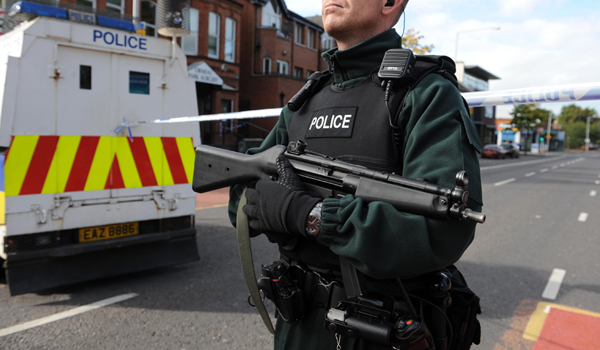
The figures, released on 12 June, show 22,827 uses of force during 2025/26, up from 19,028 the year before. Firearms were drawn or pointed on 554 occasions — a 14 per cent rise and the highest figure recorded since 2022/23 — while baton use showed the sharpest proportional increase of any category, with officers drawing and using batons 120 times, a 54 per cent jump from 78 incidents the previous year.
The release of the statistics came just after PSNI officers fired water cannon at anti-immigration rioters near the Sandyknowes roundabout in Newtownabbey, where more than 200 people gathered and hurled bricks and missiles at riot police as fires were lit in the street. At least 16 people were arrested and 12 officers were injured, some by Molotov cocktails.
The annual statistics confirm that water cannon had already been deployed and used on three occasions during 2025/26, the first recorded use since 2021/22, underlining the pressure the service has faced from serious public disorder throughout the year. The report notes that 12 of the 16 attenuating energy projectile (AEP) discharges during the period occurred during public disorder incidents, up from four of 10 the previous year.
Chief Constable Jon Boutcher said an additional 200 officers were on the streets on Wednesday as the force called in support from other services to manage the ongoing unrest, which was triggered by a knife attack in north Belfast earlier in the week.
The annual statistics cover a period that already included significant disorder. In June 2025, anti-immigration rioting in Ballymena prompted the deployment of water cannon and AEPs before spreading to other parts of Northern Ireland. The pattern of escalating disorder is reflected across multiple force categories in the new data.
Unarmed physical tactics — the most commonly recorded use of force — rose 15 per cent to 13,128 incidents, while handcuffing and limb restraints increased 33 per cent to 7,672. Irritant spray use rose 10 per cent to 289 deployments. Together, physical tactics and restraint accounted for nearly 90 per cent of all force used.
Alcohol was recorded as a perceived impact factor in 60 per cent of incidents, with drugs noted in 43 per cent and mental health in 34 per cent — figures that reflect the degree to which frontline officers are responding to public health crises as well as criminal behaviour.
Belfast District accounted for a third of all uses of force recorded during the year, with Derry City and Strabane the next highest at 13 per cent. On a per-capita basis, Belfast recorded 21 uses of force per 1,000 population, more than double the national rate of 12 per 1,000.
The statistics also show a modest decline in the use of conductive energy devices (Tasers), which were deployed 273 times compared with 301 the previous year — a nine per cent fall. The PSNI has confirmed it intends to transition to the Taser T10 device, with rollout expected towards the end of 2026.