

NPCC and college publish joint response to Daniel Morgan murder inquiry
The National Police Chiefs’ Council (NPCC) says the “fundamental mistakes” made in the investigation into the 1987 murder of Daniel Morgan “should not be repeated today”.
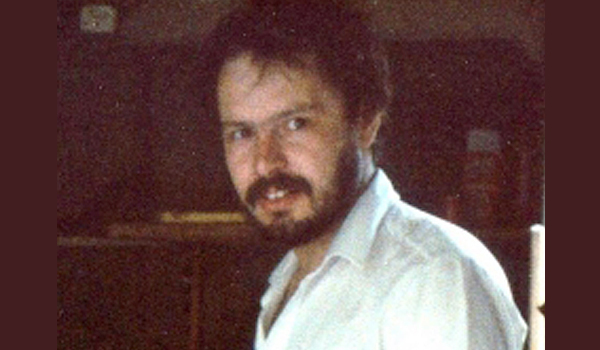
Mr Morgan was a British private investigator who was murdered with an axe in a pub car park in Sydenham, London.
Despite several Metropolitan Police Service (MPS) investigations, arrests and trial, the crime remains unsolved.
The NPCC and the College of Policing have published their joint report on progress in response to the 2021 Daniel Morgan Independent Inquiry report, alongside a response from the Home Office.
The publication of the responses on Thursday (June 15) marks the second anniversary of the panel’s report being published.
The panel was established by the Government in 2013 to look into the circumstances surrounding Mr Morgan’s murder and the police handling of the case.
The panel’s report shone a light on examples of “corrupt behaviour” throughout the investigations into the murder, which the Home Office says “irreparably damaged the chances of a successful prosecution”.
Most of the recommendations were for policing, however there were several for the government to address.
In her written ministerial statement laid in Parliament on Thursday, the Home Secretary acknowledged the progress that has been made by policing, and the MPS, in addressing the panel’s recommendations, but made clear that more must be done to repair the damage to public trust caused by the handling of Mr Morgan’s case.
Suella Braverman said: “The independent panel’s report was sobering, and for Daniel Morgan’s family to know that corruption denied them the justice they deserve is simply not acceptable.
“There have been serious failures of culture and leadership in the Metropolitan Police, and I have been clear that restoring trust and getting the basics right must be a priority for the Metropolitan Police Commissioner.
“I am also driving forward work to ensure culture, standards and behaviour across policing is improved at all levels, including reviewing the dismissals process and strengthening vetting to root out those not fit to serve.”
The Government’s response covers four key themes – investigations, tackling corruption, working with inquiries and information management – to reflect the themes raised in the panel’s report.
It notes the progress being made by policing to address concerns with tackling corruption, and the importance of the work the government is doing to drive improvement in culture and standards across policing, including strengthening vetting and reviewing the dismissals process so chief constables can remove officers who are not fit to be in the police.
The Government has also taken several steps in recent years to tackle police corruption, introducing a new corruption offence in 2017 that applies to police and National Crime Agency officers and carries a maximum 14-year prison sentence. Measures were also introduced following the Policing and Crime Act 2017 to prevent corrupt officers from resigning or retiring early to avoid being held accountable for misconduct.
The Government said it is also currently considering other recommendations in the panel’s report, such as a duty of candour, which will be responded to in full as part of its response to Bishop James Jones’ report on the experiences of the Hillsborough families.
The NPCC says all forces have clear guidance when investigating a case such as the Daniel Morgan muder and therefore “the fundamental mistakes made in that investigation should not be repeated”.
In 2021, NPCC Major Crime Investigation Manual (MCIM), supported by the College of Policing Authorised Professional Practice (APP) was updated and republished. This sets the standard for all forces when investigating major crimes.
NPCC chair Chief Constable Gavin Stephens said: “While there has been much progress in the way the police respond to this type of crime, since the tragic murder of Daniel Morgan in 1987, there is still more that can be done. Policing must be held to the highest possible standards it is vitally important that as a profession, policing reflects collective failings and always seek to improve.
“Today’s report highlights some of the key work that has taken place over the last three decades to improve standards and look to ensure that policing learns from the mistakes of the past.”
Among the updates highlighted in the report was the publication in December last year of the Home Office Code of Practice, which provides further guidance on the use of the covert human intelligence sources as a tactic. Amendments were also made to the Investigatory Powers Act (IPA) 2016 and Part II of the Regulation of Investigatory Powers Act 2000 (RIPA), as amended by the Covert Human Intelligence Sources (Criminal Conduct) Act 2021.
In addition, updates include:
- Publication in 2021 by the NPCC and College of Policing of a new edition of the Major Incident Room Standardised Administrative Procedures which provides forces with guidance to ensure that all major incident rooms are run in a consistent way and ensures that officers and staff are aware of their roles and responsibilities;
- Refreshing of the college’s Code of Practice on Police Information and Records Management. This new code will help improve the way in which records are kept including by introducing a standardised process for archiving files where there is a public interest as well as setting out advice on how files should be migrated to newer platforms to allow for accessibility; and
- Update on the upcoming revised Vetting APP publication later this year to ensure consistency across vetting departments and to standardise decision making in complex cases. In addition, by the end of 2023 all police officers, including members of the Special Constabulary and staff in England and Wales will be checked against the Police National Database (PND) to identify any intelligence or allegations that need further investigation. Officers who are dismissed for gross misconduct (including corruption) are placed on the ‘barred list’ ensuring that they are unable to work anywhere in policing, which is a significant development since 1987.
All forces in England and Wales have also signed up to a Charter for Families Bereaved Through Public Tragedy, which sets out that police organisations must acknowledge when mistakes have been made and must not seek to defend the indefensible. In addition, the college is embedding an “explicit duty of candour” in the refresh of the Code of Practice for Ethical Behaviour due later this year, to which chief officers must legally have regard.
College of Policing chief executive officer, Chief Constable Andy Marsh KPM, said: “The service confronted many harsh truths and failings after the death of Daniel Morgan. Our thoughts and sympathy remain with his family.
“This report sets out some of the ways the college has been doing this, including clearer guidance for major investigations, a new Code of Practice on record-keeping, and improved practice for vetting and counter-corruption procedures.
“Although much has changed since 1987, it is only through action and not words that policing can build public trust. Policing must continue to improve, and therefore the College of Policing will continue to set high standards to help drive this necessary improvement.”
The NPCC and College of Policing said policing “remains committed to working with all relevant stakeholders to build further on these reforms to ensure an environment exists in which corruption can never be accepted or tolerated”.
“Instead it will at all times be reported and tackled with the utmost seriousness, using legislation and disciplinary regulations to ensure such malignant behaviour is excised from the service,” they added.
“The measures set out in this report are intended to help prevent the series of events in the Daniel Morgan case from being repeated.
“While it is true that policing has come a long way since 1987, the profession must remain ever vigilant and engage in a continuous learning cycle in which we are always reviewing, refreshing and revising our policies and practices to improve our responses to cases such as this.”
In a statement following publication of the Government and joint NPCC and College of Policing responses, the MPS said it has made “substantial progress on implementing the recommendations and wider learning from the Daniel Morgan Independent Panel and two reports by the police inspectorate.
It said: “We continue to improve how we investigate homicide, and how we identify misconduct and drive out corrupt officers.
“Under the leadership of Commissioner Sir Mark Rowley there has been a relentless focus on standards, including the creation of an Anti-Corruption and Abuse Command and reporting hotline.”
Assistant Commissioner Barbara Gray said: “We are improving how we investigate homicide, identify misconduct and drive out corrupt officers.
“This includes embedding external scrutiny in legacy cases as well as improving risk management and vetting.
“We are on track to meet further recommendations by the Police Inspectorate.
“Overall, there is more to do but we hope Londoners are reassured by our progress.
“We cannot achieve this alone and are grateful for the support of the Home Office, the College of Policing and NPCC.
“We regret that the murder of Daniel Morgan remains unsolved and remain committed to getting justice for his family.”
This year, documents that had not previously been seen by the independent panel or provided to His Majesty’s Inspectorate of Constabulary and Fire and Rescue Services (HMICFRS) as part of its subsequent inspection, were discovered in a locked cabinet which had not been opened for a number of years in New Scotland Yard.
Family representatives of Mr Morgan, Independent Panel chair Baroness Nuala O’Loan and HMICFRS have reviewed the material, said the MPS.
“The Police Inspectorate has concluded their review and reported to the Home Secretary. No evidential material relating to the investigation was among the papers,” it added.
“We expect to update on potential conduct matters for consideration by the Independent Office for Police Conduct (IOPC) by the end of this month.
“The IOPC will then independently review this assessment.
“As part of our next steps, a dedicated records management team is undertaking a review and we have introduced refreshed mandatory training on handling information.”
Ms Gray added: “We fully acknowledge how unacceptable and deeply regrettable it is that documents which should have been disclosed to the Daniel Morgan Independent Panel and the Police Inspectorate were not.
“I have apologised to the family of Daniel Morgan and to the panel.”