

MPS to deploy facial recognition at protests for first time
The Metropolitan Police Service (MPS) will deploy live facial recognition technology at a protest operation for the first time this weekend as commanders prepare what they describe as one of the largest and most complex public order policing operations in recent years.
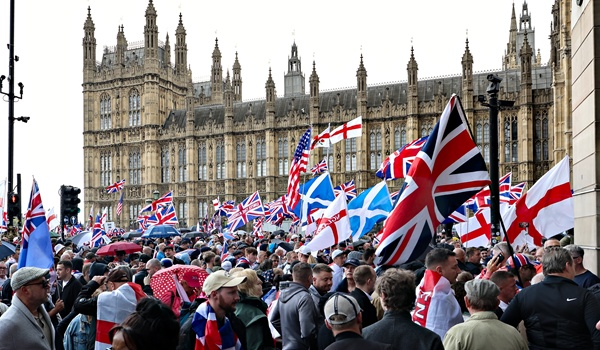
Around 4,000 officers will be deployed across central London on Saturday (May 16) as police manage two major demonstrations alongside the FA Cup Final at Wembley.
The operation will include live facial recognition (LFR), drones, helicopters, mounted officers, dog units and specialist public order teams, with senior officers warning of heightened risks linked to extremism, hate crime and public disorder.
Deputy Assistant Commissioner James Harman said the force would take the “most assertive possible use” of available policing powers.
The policing plan comes amid continued tensions surrounding pro-Palestinian protests in London and demonstrations organised under the “Unite the Kingdom” banner associated with Stephen Yaxley Lennon, also known as Tommy Robinson.
In an unusually stark briefing to journalists, DAC Harman said both Jewish and Muslim communities had reported feeling intimidated by previous protests, with some people avoiding travelling into central London or concealing visible signs of their faith.
The MPS said it had imposed strict Public Order Act conditions on both demonstrations, including restrictions on routes, timings and rally locations.
For the first time, conditions will also apply directly to protest speakers, with organisers warned they could face consequences if invited speakers engage in unlawful hate speech or extremist rhetoric.
Police also confirmed that live facial recognition cameras would be deployed in Camden targeting individuals suspected of posing risks to public safety linked to the Unite the Kingdom event. The technology has never previously been used operationally as part of a protest policing operation in London.
The MPS said its watchlists would be intelligence-led and biometrics from non-matches deleted within seconds.
Civil liberties groups have previously raised concerns about the use of facial recognition at protests, warning it could have a chilling effect on democratic participation and freedom of assembly.
DAC Harman defended the force’s approach, citing rising hate crime, recent terrorist incidents and increasing tensions linked to the conflict in the Middle East. “We will police without fear or favour and facilitate the right to lawful protest,” he said, “but we will deal swiftly and decisively with anyone who thinks they can come to London on Saturday to abuse that right by committing crime, causing intimidation or stirring up hatred.”
The operation is expected to cost approximately £4.5 million once wider operational impacts are included, with 660 officers drafted in from forces across England and Wales.
Senior officers also acknowledged the scale of the operation would require officers to be diverted away from neighbourhood policing and frontline crime duties elsewhere in London.