

MPS and Federation clash over technology versus officer numbers
A speech by Metropolitan Police Commissioner Sir Mark Rowley setting out ambitious plans to expand the use of technology across London’s policing has prompted an angry response from the Metropolitan Police Federation, which accused him of suggesting there are too many officers and that they are paid too much.
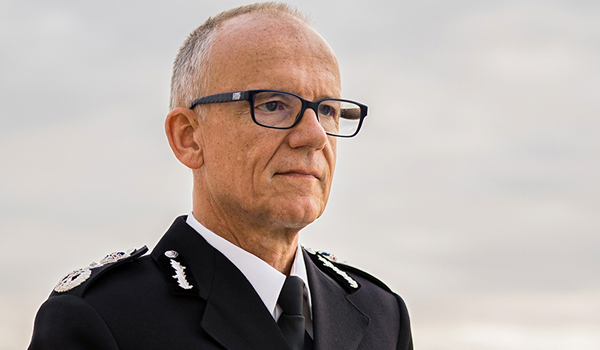
Sir Mark, speaking at a Police Foundation event in London, announced plans to expand the Met’s drone programme to every London borough within the next year and to build a shared aerial surveillance network across all of the capital’s blue light services. He also disclosed that AI video analytics had saved 454 officer days across just 23 major investigations, and announced the rollout of static live facial recognition cameras across central London.
But it was his argument about resourcing that provoked the sharpest reaction. He said that for decades politicians had prioritised officer numbers over technology investment, protecting salary budgets while cutting spending on infrastructure and innovation. He noted that while some parts of the public sector spend more than £13,000 per person on technology and data, the Met can afford only around £6,000, less than half that figure.
Metropolitan Police Federation Chair Paula Dodds said officers across London “will be disgusted” by the Commissioner’s remarks. “These very same officers will be disgusted to hear that the Metropolitan Police Commissioner thinks there are too many of them and that they are paid too much,” she said.
Dodds cited figures showing that officer pay is already around 20% behind inflation over the past 15 years, with 15 per cent of officers reporting missing meals due to financial hardship and one in three considering leaving the service because of poor pay. She noted that an estimated 18 Metropolitan Police officers would be assaulted on duty on the day of Rowley’s speech.
“Technology has its place in policing. But it must never replace the courageous police officers out there on the streets carrying out their difficult and dangerous role,” Dodds said. “The current focus on funding for technology has gone too far.”
She also challenged Rowley’s characterisation of officer pay as having been protected, describing it as “outrageous” coming from a commissioner on a salary of nearly £300,000 a year. “Tell that to officers who are struggling to pay the bills,” she said, adding that officer numbers were already falling and that those remaining were “emotionally and physically exhausted.”
Dodds concluded with a pointed reminder of the limits of technological solutions: “You can’t throw laptops at crowds.”
PoliceAI, the national centre for AI in policing, struck a more supportive note but offered an implicit qualification to Rowley’s argument that governance requirements were slowing progress. Interim director Alex Murray OBE said innovation had to be at the heart of modern policing but warned that “pace cannot come at the expense of trust.”
“The way we procure, govern and deploy AI matters just as much as the capability itself,” Murray said. “We need systems that allow forces to move faster, while embedding the safeguards, transparency and accountability that the public rightly expects.”
PoliceAI highlighted the use of AI video analytics for processing large volumes of CCTV — including in the triage and classification of child sexual abuse material — as a key operational priority being advanced across forces, alongside the establishment of a new PoliceAI Threat Hub to improve understanding of emerging AI-enabled threats.
Sir Mark, for his part, used his speech to call for a radical overhaul of public sector procurement — warning that the current process could take 15 months from defining requirements to awarding a contract — and pushed back on calls for new legislation to govern each emerging technology. He argued that policing already operated within a robust framework overseen by at least five regulators and commissioners, and that waiting for new laws every time a new capability emerged would leave policing unable to keep pace with criminals.
The drone expansion announced by the commissioner would see the Met work with the London Fire Brigade and other blue light partners to build a city-wide network built on shared infrastructure, covering airspace management, launch sites, connectivity and data systems.
Drone deployments have already grown to around 200 incidents a week, with average response times of around two minutes compared to nine minutes for response officers.