

Met chief warns policing faces decline without radical reform
Metropolitan Police Commissioner Sir Mark Rowley will call for England and Wales’s 43 police forces to be replaced by eight to ten regional forces, warning that policing faces “inevitable decline” unless it undergoes the biggest structural reform in more than half a century.
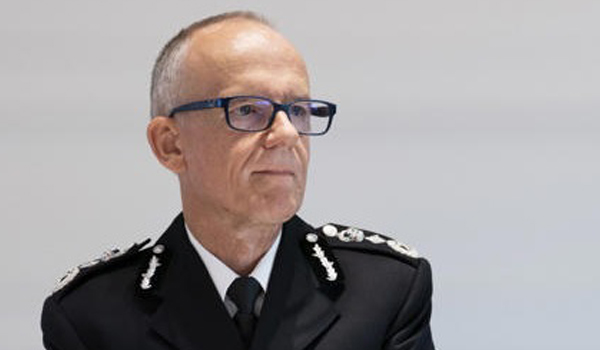
In a major speech in Manchester today, alongside four other police chiefs, Sir Mark is expected to argue that the current model is no longer equipped to deal with increasingly complex and cross-border criminality, including organised crime, fraud, online child abuse, cybercrime and hostile state activity.
He will propose a three-tier structure comprising local policing commands, larger regional forces and a new National Police Service, arguing that the existing system duplicates functions and spreads specialist capabilities too thinly.
The restructuring could free up thousands of roles currently involved in duplicated administrative and support functions, allowing resources to be redirected towards frontline policing, according to the Commissioner.
“The model is creaking. We have 43 overstretched forces trying to do too much, with too little,” he is expected to say.
Sir Mark will also warn that police performance has deteriorated, with positive outcomes nationally now less than half the level recorded 12 years ago. He will point to a nine per cent fall in public confidence and argue that communities are experiencing the consequences through reduced police visibility, overstretched services and victims waiting too long for justice.
He will argue that forces are increasingly diverting officers from neighbourhood policing to deal with demand arising from pressures elsewhere in the public sector, particularly mental health and social care.
The Commissioner is also expected to highlight the financial pressures facing policing, saying spending has fallen from around 0.9 per cent of GDP to 0.7 per cent since 2010 in England and Wales.
He will argue that individual forces are spending too much maintaining ageing systems and trying to develop specialist capabilities independently, while criminals are exploiting advances in technology and operating across force and national boundaries.
The proposed regional structure would allow larger forces to develop and maintain specialist expertise, while local policing commands would retain responsibility for neighbourhood-level issues and accountability to communities.
A National Police Service would take on national responsibilities, including tackling serious and organised crime and counter-terrorism.
The proposals come as the Government considers its own restructuring plans. Its police reform white paper, published in January, set out the intention to reduce the number of forces and establish a National Police Service, arguing that some existing forces lack the scale to deal effectively with complex investigations and major incidents.
Former Metropolitan Police Commissioner Lord Bernard Hogan-Howe has led an independent review of police force structures. The review has been completed and submitted to the Home Secretary, although its recommendations have not yet been published.
The Guardian has reported that the review considers a range of between nine and 18 regional forces, with a separate force for Wales and more than 150 local policing units.
However, there is not universal support among police leaders for the most extensive mergers. Some have raised concerns about the scale of proposed regional forces, the potential disruption of restructuring and whether larger organisations would necessarily deliver better policing.
Questions have also been raised about how local accountability would be maintained if forces covered substantially larger geographical areas. The Government has said its reforms will preserve strong local policing while improving national capabilities and consistency of service.
Sir Mark will frame the proposals as an opportunity to modernise policing ahead of its 200th anniversary in 2029, arguing that the threats facing the public have changed far more rapidly than the structures designed to tackle them.
“The real danger is not change. The real danger is standing still,” he is expected to say.