

Government must review public safety at events, says inspectorate
The government should carry out a review of the arrangements for public safety at events, a new report from His Majesty’s Inspectorate of Constabulary and Fire & Rescue Services (HMICFRS) has found.
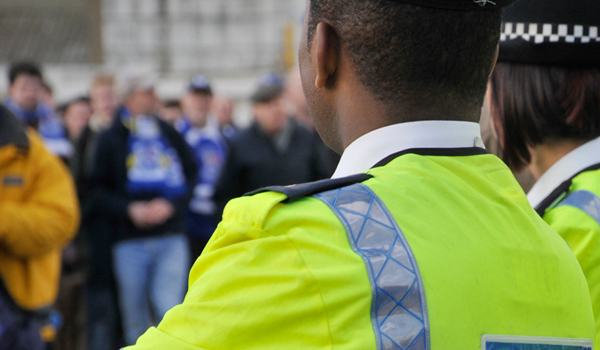
The inspection, commissioned by the Home Secretary, examined the contribution police forces make to safety advisory groups (SAGs) — the local forums, made up of representatives from local authorities, event organisers and other bodies, that discuss and advise on public safety at events.
HMICFRS was asked to carry out the inspection after a SAG decided to bar all Maccabi Tel Aviv supporters from an Aston Villa fixture in November 2025, a decision that triggered international political and media criticism and accusations that politics had distorted the police’s intelligence assessment.
Inspectors found that while safety arrangements at sports grounds have improved since the 1990s, the wider framework for public events such as music festivals and cultural celebrations remains insufficient. The absence of legislation, statutory guidance and regulation for most such events has left police forces wrestling with widespread inconsistency, including inconsistent funding, HMICFRS said.
The report found that SAGs vary significantly in how they operate across the country, with some local authorities not running them at all. Guidance and training were found not to adequately prepare police commanders to work with SAGs, and the absence of a safety certification regime or wider regulation for most public events was said to be compounding the inconsistencies.
Inspectors also found that the Purple Guide — the industry document setting out roles and responsibilities for event safety — overstates event organisers’ legal responsibilities while downplaying the role of police and other emergency services.
His Majesty’s Chief Inspector of Constabulary Michelle Skeer OBE QPM said the message from many contributors to the inspection was that it is “a question of when, not if” public safety at an event will go wrong.
“We are concerned that the lack of legislation and statutory guidance for non-sporting events is leading to widespread inconsistencies in the police’s public safety operations,” she said. “They, and the public, deserve clarity so that police forces can work with local authorities and event organisers to protect the public.”
The full report discloses new detail on how AI use contributed to the errors in West Midlands Police’s assessment of the Aston Villa v Maccabi Tel Aviv fixture. A written risk report the force gave the SAG contained several factual inaccuracies, including a claimed prior UK fixture between Maccabi Tel Aviv and West Ham that inspectors say never took place.
When questioned by HMICFRS, the West Midlands Chief Constable said the force had not used AI tools in preparing the report — a position he also gave the Home Affairs Committee in January. But inspectors say a different WMP interviewee told them plainly that the erroneous claim came from a Microsoft Copilot search, and described the error as an “AI hallucination.” Inspectors say they received contradictory evidence from the force on this point.
West Midlands Police has previously said it has since barred the use of AI in similar intelligence work, and the incident is already the subject of an ongoing IOPC gross misconduct investigation into former Chief Constable Craig Guildford and three other officers and staff, as reported by Police Professional last month.
Alongside the call for a government-led review, HMICFRS has made a further 36 recommendations. These include improved training for officers and staff working with SAGs, strengthened guidance on managing critical incidents, and a new national police support function for events with a national risk assessment matrix.
On AI specifically, the report recommends that the College of Policing refresh its intelligence management guidance to cover AI use within intelligence functions, with chief constables required to put robust quality assurance checks around any AI-assisted intelligence products and risk assessments.
Separately, the UK Resilience Academy is told to publish revised SAG guidance by the end of this year covering appropriate AI use by event organisers and SAG members, who should declare where AI tools have been used and treat AI-generated material as always requiring human verification.