
Could police reform weaken police education?
As ministers promise sweeping reform, two leading policing academics warn that simplifying officer training could unintentionally weaken the profession’s ability to deal with an increasingly complex world.
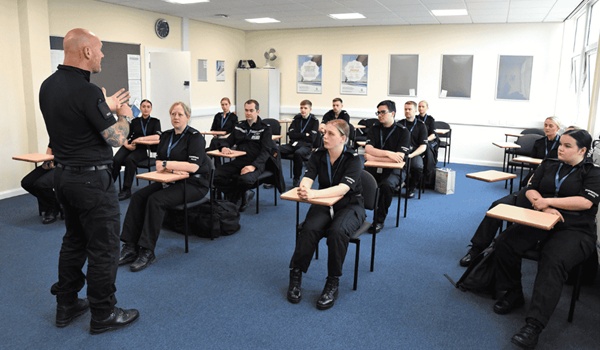
The recent White Paper published by the present Government on projected police reform programme in England and Wales for the next few years promises as they say, to be ‘monumental’. If we accept that the main object of the state is the protection and welfare of its citizens, then these changes may be seen in that light, that of improving security for all communities.
However, it appears that the discourse surrounding these proposals has been limited to the larger announcements surrounding the reduction in the number of forces, the new system of governance and accountability following the demise of police and crime commissioners and the creation of a national police service. Important though these are, a closer inspection of some other aspects of the white paper suggest equally important, yet so far undiscussed, aspects of change.
One such aspect is found in section 2 of the White Paper under the heading ‘Simplifying Training’. This article is intended to explore this idea, considering what this will look like, and potential positive and negative aspects of adopting such an approach.
Reasons for the change
Such a monumental raft of changes as suggested by the white paper need to be understood in the context of a complex and changing world, especially one in which sees more and different acts of criminality. In summary, there are three main areas which the White Paper suggests are the reasons driving the proposed changes, they being:
1. A lack of public confidence in the police
2. Police performance has declined and is inconsistent across the country
3. Crime is changing radically and the police are struggling to keep pace.
Those people interested in policing in England and Wales would not be surprised at these three main areas, given the lack of investment and support for policing over the past 15 years or so. Indeed, even the so-called ‘operation uplift’, which aimed to recruit 20,000 extra officers, would only place police officer numbers to just about the level of staff in 2010.
Given the radical changes being introduced on the basis of these three main areas, it is important to consider how the future police officers, staff and volunteers will be trained to perform in such a challenging environment.
The current situation
Currently police officers in England and Wales undergo their new recruit training and education via a number of different routes depending on the recruits’ previous qualifications and a forces decision on which entry routes they offer.
Those recruits who do not already hold a degree can complete a three-year Police Constable Degree Apprenticeship (PCDA), or those who have previously completed a degree can complete the two-year Graduate Diploma through the Degree Holder Entry Programme (DHEP). These two education and training programmes had their first recruits commence their studies in 2018; the programmes are taught by police force trainers and workbased tutors along with lecturers from each forces contracted higher education partner.
A third route of recruit training is the two-year Police Constable Entry Programme (PCEP) taught in-house by police force trainers and tutors. The PCEP was designed at the direction in 2022 of the then Home Secretary, Suella Braverman, to provide an equivalency of level 5 higher education learning but through a programme that does not lead to an educational award for police officer recruits who do not have or want a degree. Following the introduction of PCEP in 2024, several police forces have sought educational recognition, or opportunities for educational progression, for their officers studying PCEP.
There is also a traditional undergraduate programme for those aspiring to join policing but have not yet been recruited. The three-year Professional Policing degree (PPD) is a self-funded knowledge only programme based on the PCDA. Graduates of the PPD are not guaranteed employment within policing and do not normally complete workplace practice.
With the exception of the PCEP, much of this approach has been driven by the so-called recognition of the profession of policing which sees higher education (or its equivalent) as an integral part of that process.
Given that the current ideas around professionalising the police revolve in a large part upon wider embracing the value of education through understanding complex social community issues, does any change in this approach mean a reduction of learning in favour of stepping back to a more functional approach of training?
It does not go unnoticed for example that the white paper when discussing this aspect of education, suggests that although some classroom-based work will always be necessary, there are real benefits from integrating training into operational work.
Perhaps here we should differentiate between the ideas of training and education. Training has been defined as the process of bringing a person, to an agreed standard of proficiency, etc by instruction, practice and repetition. The definition of education has been described as a process of teaching, training and learning, especially in schools, colleges or universities, to improve knowledge and develop skills. It is about the individual learning to think, be critical in that thinking, and adapt more easily to changing circumstances.
Simplifying training
So, what does simplifying training actually entail? The White Paper suggests that the College of Policing is already looking at the current process to ensure training requirements are proportionate and evidence based which one assumes is the removal of duplication and streamlining the curriculum. Such optimisation would appear sensible, but it may lead to a return to police officers receiving old fashioned and traditional style training as opposed to exposure to more critical issues and wider understanding. If that is the case then this is ironic, given that the need for change in structure of the police etc is based upon the increasingly complex and challenging nature of police work now and in the future.
Using a somewhat extreme example from the US, strong criticism of ICE (U.S Immigration and Customs Enforcement) revolves around a lack of training and a complete lack of community issues, social problems empathy or political inclinations, leading to a backlash against authority and a complete lack of cooperation from many citizens.
Conclusion
In one sense the White Paper is a plan for overdue change for policing in England and Wales. It recognises the challenges that police organisations face in an ever changing complex political and social environment. In another sense it could be seen as a failure on the part of government to provide adequate resources, including technological resources, for policing over the past decade or so which now requires urgent organisational overhaul.
At least the proposals recognise such challenges for police in England and Wales, and emphasis the problems that will be faced. However, the anomaly appears to be that, for these changes to come about, there may be a change in the way in which police officers, staff and volunteers will be educated in the future. This change may be a reduction in education of police officers and a higher focus upon traditional and some may say old fashioned way of education police and one that contributed to some negative aspects of police occupational culture.
We are right to provide the best technical equipment to our police officers and staff for them to carry out their duties. However, we should also provide them with the best education available to enable them to function effectively in a fast moving, complex and challenging society.
Organisational changes may be the framework for the police in England and Wales to deal with such issues, but neglecting the importance of the correct education and training will undermine any good that comes out of the proposed changes.
Colin Rogers is Professor of Policing and Security at the University of South Wales. A former police practitioner of 30 years’ service, he has a BA (Hons) degree in Police Studies, MSc in Social Science Research and a PhD in Policing Zero Tolerance. He has researched policing and crime across the world.
Dr Ian Pepper is a Visiting Professor in Professional Practice at the University of Sunderland, and formerly a Professor in Policing in the International Centre for Policing and Security at the University of South Wales.