
Reshaping digital forensics
Daren Greener explores how digital forensics must evolve, not just to extract data, but to prove its authenticity, highlighting both the threats and opportunities AI presents for the sector.
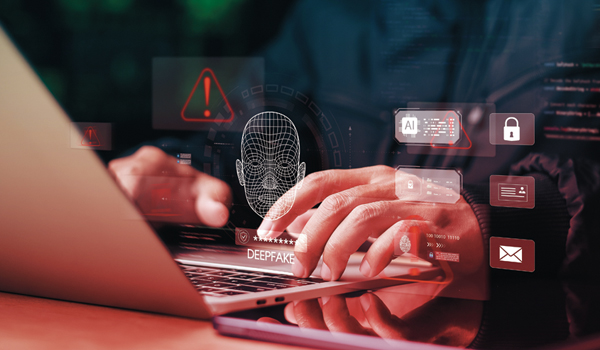
Digital evidence always requires careful handling, but the landscape has shifted considerably with the emergence of deepfakes and artificial intelligence (AI)-generated content. Audio, video, images, and even chat logs, can now be fabricated to a level of realism that didn’t seem possible just a few years ago.
For investigators, legal teams and law enforcement, this presents an urgent challenge – how do you establish the truth when digital content can be manufactured so meticulously?
Over the past two years, we have seen rapid advances in generative AI models capable of producing highly convincing synthetic media. Voice cloning can replicate speech patterns with just a few seconds of audio. Deepfake video tools can map one person’s face onto another with minimal artefacts. Text-generation systems can fabricate complete message histories that appear consistent with real device backups.
These capabilities are no longer niche – they are easily accessible, affordable and increasingly used in:
- Financial fraud and impersonations of CEOs
- Extortion and reputational attacks
- Political manipulation
- Corporate espionage
- Attempts to mislead investigations or fabricate alibis
- Exploitation and subsequent blackmail
Traditional forensic techniques such as metadata analysis, file provenance and device extraction remain essential, however, they are no longer sufficient on their own. The lines between genuine and synthetic are blurring, with AI now capable of removing or replicating artefacts that examiners have historically relied upon.
Why AI makes validating evidence more complex
AI-generated content introduces several new layers of complexity for forensic practitioners.
Traditional artefacts such as compression signatures, sensor noise, and EXIF data can now be artificially recreated or removed entirely, undermining long-standing validation techniques. In addition, adversarial AI tools are increasingly designed to evade forensic detection by producing content that replicates natural digital patterns.
There is also the risk of misclassification, where genuine evidence may be wrongly identified as synthetic, or fabricated material may be accepted as authentic. At the same time, legal expectations are evolving, with courts increasingly requiring experts not only to present findings but also to clearly demonstrate how authenticity has been established.
The result is a growing ‘reasonable doubt inflation’, where any digital evidence can be challenged as fake.
Emerging threat scenarios
The risks posed by deepfakes and AI are no longer hypothetical, as they are increasingly appearing in modern investigations in a variety of forms.
These include cloned voice notes used to authorise fraudulent bank transfers, AI-generated chat logs inserted into device backups to frame individuals, synthetic CCTV footage created to establish false alibis, and fabricated emails or documents introduced into corporate disputes.
Each of these scenarios requires a forensic approach that goes beyond extraction. It needs authentication and correlation, in addition to expert interpretation.
Digital forensics must evolve
To meet these challenges, digital forensics must adopt a multi-layered approach:
- Signal-level analysis: Examining noise patterns, frequency inconsistencies and GAN-generated artefacts.
- Behavioural and linguistic analysis: Ability to identify anomalies in writing style, timing or interaction patterns.
- Cross-source correlation: Comparing device data with network logs, cloud records and independent systems.
- AI-assisted detection tools: Using machine learning to identify synthetic fingerprints that are invisible to the human eye.
- Human expertise: Interpreting findings within investigative, legal, and technical contexts.
Automation alone is not enough. Robust conclusions depend on experienced digital forensics practitioners who understand both the technology and its evidential implications.
Restoring trust in digital evidence
Organisations such as SYTECH, with long-standing experience in digital forensics, are increasingly focused on ensuring that analysis is both impartial and defensible in the face of synthetic media.
Accredited laboratory environments, combined with clearly explained expert testimony, are becoming essential in helping courts and investigators understand complex AI-related challenges.
As AI continues to complicate the evidential landscape, having valued, scientifically grounded analysis has never been more important.
Implications for legal and investigative teams
Courts and investigators are already tackling the consequences of synthetic evidence with standards and best practice evolving, but still not consistent across sectors.
Authenticity challenges are becoming more frequent and organisations must be prepared for any digital evidence to be questioned.
During expert testimonies, it is becoming increasingly common to explain how authenticity was established.
This shift places a greater emphasis on early engagement with forensic specialists while maintaining robust evidence-handling procedures.
Preparing for the synthetic evidence era
Organisations are encouraged to take a proactive approach to reduce risk and strengthen evidential resilience.
This includes training investigators to recognise potential synthetic artefacts, updating internal policies to account for the possibility of AI-generated manipulation, and engaging forensic specialists early when questions around authenticity arise.
It is also important to implement secure evidence capture and logging systems, alongside maintaining robust chain-of-custody procedures to ensure evidential defensibility. Taking these steps in advance is both more effective and less costly than attempting to respond after synthetic evidence has already influenced an investigation.
Trust needs to be earned, not assumed
As deepfakes and AI-generated content continue to evolve, the challenge is evidential, legal and societal. Trust is the most valuable commodity in digital investigations.
Ensuring that truth remains discoverable, even when AI is used to obscure it, depends on rigorous scientific methods, independent expertise, and continuously evolving forensic practices. These principles are essential for navigating an increasingly complex digital landscape.
Daren Greener is Managing Director at digital forensics service provider SYTECH.