

MPS expands early release of body-worn video
The Metropolitan Police Service (MPS) says it will publish body-worn video from officers more frequently and at an earlier stage of incidents. The force says the move will improve transparency but it also reflects growing concern within policing over the impact of partial footage circulating online in the immediate aftermath of high-profile events.
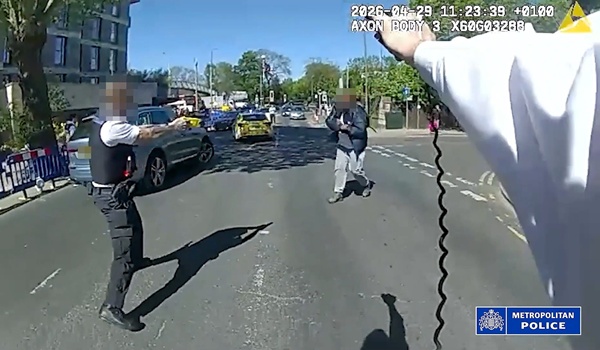
Under the revised approach, body-worn video may be released before the conclusion of criminal proceedings where it is considered necessary and proportionate, subject to legal and operational safeguards.
Previously, such footage was typically only published once investigations or court proceedings had concluded – a process that can take months or, in some cases, years. The MPS said that often left public understanding of incidents shaped by videos shared online by witnesses or bystanders, sometimes showing only brief excerpts of longer interactions.
The force said the revised policy was designed to allow “the full picture” to be made available more quickly while protecting the integrity of future legal proceedings.
The approach has already been used in recent weeks, including following the knife attack in Golders Green, when the MPS released body-worn footage from attending officers within hours after criticism emerged online over the force used during the arrest.
It was also used after a significant public order policing operation in central London last weekend, when the force published footage showing officers facing abuse from protesters and the challenges involved in making arrests within dense crowds.
Commander Neerav Patel said the change would help Londoners better understand frontline policing while also supporting officers whose actions are increasingly scrutinised. “The public only see a fraction of the incredible work that officers do each day; this new change in policy will allow them to see what we’re doing to keep them safe,” he said.
“It also protects our hardworking officers. We are increasingly seeing videos posted online which are selectively edited or show a short snippet of a longer interaction. Without the full picture this undermines the work of our officers.”
The policy states that any decision to release footage must take account of the MPS’s legal obligations, including data protection, operational risk and the potential impact on future criminal proceedings.
It further states that where another organisation — such as the Independent Office for Police Conduct — has primacy over an investigation, the decision to release footage rests with them, not the MPS. In practice, this means footage will mostly be released when related to incidents the force has already decided to publicise.
The move reflects a broader shift in how policing is using body-worn video. Originally introduced primarily as evidential material for investigations and prosecutions, footage is increasingly being used by forces as a communications tool,
With public reaction to police encounters now often developing online within minutes – frequently through short clips shared on social media before official statements are issued – forces are under growing pressure to respond quickly with fuller context. Recent weeks have also seen the MPS responding directly to misinformation posted onto social media channels, attempting to counter false narratives before they had had a chance to become widespread.
The MPS said polling showed 60 per cent of Londoners surveyed trusted the force more after seeing footage of criminals being apprehended and that 81 per cent of Londoners now say the MPS is doing a good or fair job.