
Everything I got wrong about leaving the police
Our new series on life after the warrant card opens with a former sergeant’s account of the setbacks, miscalculations and eventual breakthrough that reshaped his career — and led him to write the guide he wished had existed.
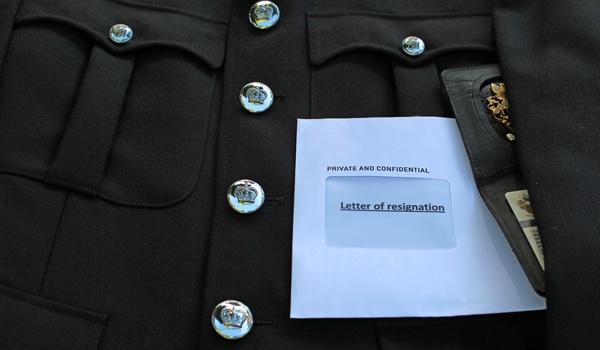
I want to be upfront with you from the start. I’m not a career coach, I’m not a consultant and I’m not trying to sell you a dream. I’m a former Police Sergeant who left the job in December 2024 after ten years across British Transport Police and Wiltshire Police, made almost every avoidable mistake on the way out, and spent the best part of a year struggling before finally getting to a good place.
I didn’t leave because I hated policing. I want to be clear about that because it matters. Being a police officer is a privilege like no other. You’ll see and experience things that 99 per cent of people can’t begin to imagine. You’ll carry things that won’t ever leave you. You’ll go to the hurting places, and then back again. I have enormous respect for the people still doing it.
Somewhere around the six or seven-year mark, I began to fall out of love with it. Not dramatically, not overnight, just gradually, in the way that things do when the environment around you stops reflecting the reasons you joined in the first place.
The moment that made the decision for me arrived during paternity leave. I received a text message – not a phone call, not a conversation, a text message – telling me that my post was being de-funded and that I would be reposted to a role of the force’s choosing at the next posting panel.
No warning, no conversation, no acknowledgement that I was at home with a newborn.
That was the moment I knew it was time to go. Not because of the decision itself, but because of what it revealed about how I was valued as a person rather than a resource. Combined with a manager whose intellectual ability was considerable but whose capacity to lead people on a human level was non-existent, my mind was made up.
I paid £150 for a professionally rewritten CV that looked impressive but, I soon discovered, performed terribly as the rejections began piling up. I bought memberships to professional organisations because I saw others doing it on LinkedIn and convinced myself that was the missing piece.
Over the course of the next four months I applied for 50 jobs, many of which I wasn’t at all suited for, and along the way ignored dozens of roles that would have been a far better fit.
There were five awkward interviews and finally one offer which came at the end of a conversation I was completely unprepared for. They asked me what salary I was expecting.
In ten years of policing, I had never negotiated pay in my life. I’d joined a scale and moved up it. Whether I was happy with the number or not, it was never a discussion. I had no idea what to say, so I simply said the first number that came into my head.
They accepted and so did I, handing in my notice to take up a position in trust and safety at a startup gaming company – a world I knew little about – leaving me underpaid and undervalued from day one. The fact that this was where I landed tells you everything you need to know about how poorly I understood the world of non-policing work at that point.
I’m now a Senior Content Moderation Specialist at Depop, one of the world’s largest online fashion resale platforms, where I lead the response to off-platform fraud and the deployment of AI tooling into our moderation operations. It draws heavily on the investigative and risk-based thinking policing gave me, and I genuinely enjoy it.
I got there largely through trial and error, but the whole experience made me realise how little honest, practical guidance exists for officers considering leaving the job.
Too much of the conversation sits at extremes. Either policing is portrayed as completely broken and impossible to remain in, or leaving is presented as a seamless transition into a high-paying private sector role. For many officers, the reality is far messier than either version suggests.
Your CV is probably the first thing that will let you down. Not because you lack experience, but because policing trains you to write like… well, a police officer.
Most CVs I see from serving officers read like a statement taken at 03:17 hours on a wet Tuesday. Accurate. Detailed. Technically correct. And completely baffling to anyone outside policing.
That’s why so many officers send dozens of applications and hear nothing back. Their capability is real, but it’s hidden behind terminology that means nothing to hiring managers.
I spent a long time figuring out how to translate policing experience properly after I left. It’s what led me to write The Police Exit Manual and why I’m writing this column.
Over the coming months I’ll be covering the things policing doesn’t prepare you for: how to read a job description properly, salary negotiation, the sectors that genuinely hire ex-officers and what the work actually looks like, the pension reality and the emotional side of leaving a role that shaped your identity for years.
None of it is motivational and none of it promises shortcuts. It’s just an honest account of how this actually works – written by someone who got it wrong before they got it right.
Connor Crespin is the author of The Police Exit Manual, a guide for UK police officers navigating the transition into the private sector As an exclusive offer, Police Professional readers can claim 25% off using coupon code POLICEPROFESSIONAL2026 at payhip.com/thepoliceexitmanual