

PCC quits NPAS board over helicopter expansion
Wiltshire police and crime commissioner Philip Wilkinson has resigned from the National Police Air Service (NPAS) National Strategic Board after the Home Office approved funding for two additional police helicopters as part of a major fleet replacement programme.
Mr Wilkinson said he could no longer support what he described as a potentially “serious misuse of public money” at a time when policing should be investing more heavily in drone technology and modernisation.
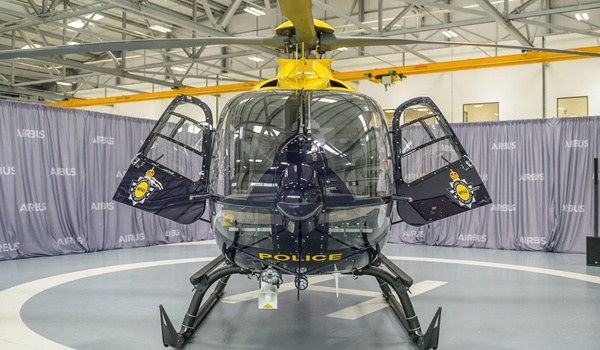
The resignation came shortly after NPAS announced that the UK Government had approved funding for two further Airbus H135 helicopters, in addition to seven already commissioned under the national fleet renewal programme.
NPAS said the investment would help modernise the national police aviation fleet and ensure forces across England and Wales continued to receive “reliable, resilient, and effective air support”.
But Mr Wilkinson said the decision highlighted a growing disconnect between national policing procurement and the operational realities faced by smaller forces.
“I cannot be associated with a decision which, in my view, risks representing a serious misuse of public money at a time when policing must be focused on efficiency and modernisation,” he said.
The PCC has previously questioned the current model and campaigned for the south west forces to leave the current NPAS arrangement in favour of greater investment in drone capability and emerging technologies.
In November last year, figures showed NPAS aircraft attended 1,650 incidents across the south west during the previous year, including 139 in Wiltshire. During the same period, the five south west forces represented by Mr Wilkinson, Wiltshire, Devon & Cornwall, Avon & Somerset, Dorset, and Gloucestershire, carried out more than 4,100 drone deployments, including 765 in Wiltshire.
“At the same time, we are already seeing the growing effectiveness of locally deployed drone technology, which is more flexible, more responsive and better aligned to the types of incidents our officers are dealing with every day,” he said.
Mr Wilkinson stressed that helicopters and fixed-wing aircraft would continue to have an important role in policing but said the balance of investment needed to shift toward emerging technologies, including drones and artificial intelligence.
“In 1914, the War Office had the moral courage and vision to resist the pressures of the generals to continue to invest in horses rather than tanks and move towards new technology,” he said. “In 2026, we need that same willingness to adapt. It is increasingly clear — from developments in Ukraine and elsewhere — that the future of air capability lies in drones.”
The disagreement appears to expose a wider debate within policing over the future direction of specialist air support capability, particularly as forces face increasing financial pressure while drone technology becomes more sophisticated and widely available.
In its announcement, NPAS said the additional helicopters formed part of a wider programme to replace ageing aircraft while maintaining operational continuity across England and Wales.
Chief Superintendent Fiona Gaffney said the investment demonstrated “continued confidence in NPAS and the value it provides to policing and the public”.
The first of the new helicopters is expected to enter operational service from mid-2027.
NPAS, which is delivered by West Yorkshire Police, currently operates a fleet of 20 helicopters and four aeroplanes across England and Wales.