

MPS wins judicial review over use of LFR
The Metropolitan Police Service (MPS) has won a judicial review into its use of Live Facial Recognition (LFR) across London.
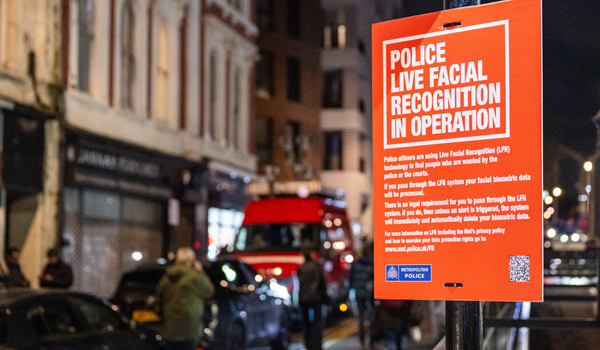
Youth worker Shaun Thompson, and Silkie Carlo, director of campaign group Big Brother Watch, brought the claim over concerns that facial recognition could be used arbitrarily or in a discriminatory way. Mr Thompson said the force’s technology wrongly identified him as a suspect in February 2024 outside London Bridge Tube station.
However, the Court concluded that the MPS’s policy complies with human rights law, recognising that it contains clear, precise and effective safeguards.
Sir Mark Rowley, Commissioner of the Metropolitan Police Service, said: “This legal judgment is a significant and important victory for public safety. It confirms that the Met is right – and acting lawfully to use the best modern technology to reduce crime and keep pace with the evolving threats we face.
“Live Facial Recognition works and is one of the biggest break throughs for policing. It is actively removing thousands of dangerous and wanted offenders from London’s streets, including individuals who pose a serious and ongoing threat to our communities – those wanted for the most serious offences, such as rape, domestic abuse, and child sexual offences. Our data shows that the technology is highly accurate and we have already made more than 2,100 arrests. Last year alone, more than three million faces walked past the cameras, resulting in just 12 false alerts, none of which led to an arrest. Crucially, every alert is reviewed by trained officers before any action is taken.
“The court has been clear: our use of Live Facial Recognition is lawful and supported by strong safeguards. The judgment confirms that we are deploying this technology responsibly and with care. It shows that fairness, accuracy and accountability were part of the design from the beginning. It also recognises that the Met has strong oversight and safeguards in place. These include checks to ensure use is proportionate and that people’s rights – such as privacy and freedom of expression are protected in a way which does not breach human rights.
“The public is firmly on our side. Around 80 per cent of Londoners support the use of Live Facial Recognition to help keep them safe. Yet a small number of campaign groups continue to argue that police should be prevented from using a proven tool that helps us catch paedophiles, rapists, violent criminals and those wanted by the courts. That position is increasingly out of step with both public opinion and the realities of both modern communities and policing.
“This is not secret surveillance. Deployments are clearly signposted and highly visible, and technology never replaces professional judgement. Trained officers assess alerts on the ground and decide what action, if any, is necessary.
“LFR technology is a key part of our determination to accelerate the use of smart policing tools to better protect London’s communities while making the best possible use of limited resources. It helps us catch more criminals quickly and precisely, saves officer time, and ultimately saves money.
“The courts have confirmed our approach is lawful. The public supports its use. It works. And it helps us keep Londoners safe. The question is no longer whether we should use Live Facial Recognition – it’s why we would choose not to.
“Technology is advancing at record speed, and policing cannot afford to stand still – criminals won’t. Facial Recognition is transformational for policing. Government and Parliament will want to carefully consider how they continue to enable, rather then over‑regulate, the use of technologies that help us prevent crime and protect the public as proven today.”
Data released by the MPS shows that, since the start of 2024, more than 2,100 arrests have been made through the use of LFR and of those, 24% were for violence against women and girls offences (VAWG). More than 1,400 individuals have been charged or cautioned. In addition, more than 100 sex offenders have been arrested using the technology.
Speaking at Charing Cross Police Station in response to questions about plans to expand the use of the technology, Sir Mark Rowley said live facial recognition technology “won’t be as ubiquitous as CCTV”. He said the force is using the technology “in a targeted way” and in “high-crime areas”, adding that “it’s not going to be on every street corner”. He continued: “So, while there are pressure groups who are concerned, that doesn’t reflect the rest of society.”
Policing Minister, Sarah Jones said: “I welcome today’s ruling because there can be no true liberty when people live in fear of crime in their communities. Live facial recognition only locates specifically wanted people – law abiding citizens have nothing to fear.
“This technology puts dangerous rapists and murderers behind bars – and I question any group who call that uncivil. We are rolling out facial recognition across the country with record investment to keep communities safe.”
Responding to the ruling, Silkie Carlo said: “This is a disappointing judgment, but the fight against live facial recognition mass surveillance is far from over. There has never been a more important time to stand up for the public’s rights against dystopian surveillance tech that turns us into walking ID cards and treats us like a nation of suspects.
“Innocent people deserve clear and strict protections from live facial recognition cameras, which should be reserved for the most serious cases rather than used to scan millions of people, and that is what the appeal will seek to achieve.
“This legal challenge, which was made possible by concerned members of the public, has already led to a change in the Met’s facial recognition policy and to a payment awarded to Mr Thompson, who was misidentified by the tech and threatened with arrest. He has been courageous in challenging the police, defending his rights and now standing up for the rights of millions of others in the country.”
Mr Thompson added: “I’ve considered the court’s judgment today and decided to appeal it to protect Londoners from facial recognition being used for mass surveillance and leading to situations like mine, where I was misidentified, detained and threatened with arrest. No one should be treated like a criminal due to a computer error.”