

MPS launches new plan to ‘radically transform’ policing across London
The Metropolitan Police Service (MPS) is putting communities back at the heart of policing under its new plan to deliver more trust, less crime and high standards.
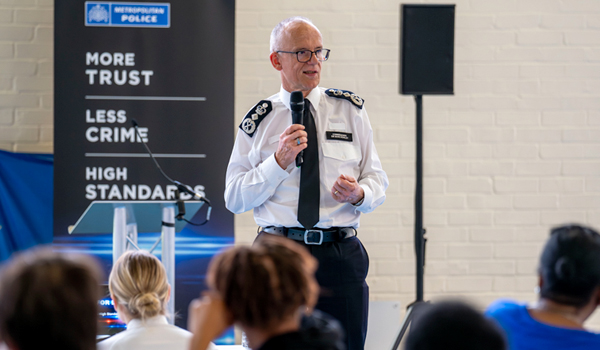
The force launched its ‘A New Met for London’ policing plan on Monday (July 17), which sets out how it will “radically transform the organisation to set officers and staff up to succeed”.
“We are fixing our foundations, radically changing how we train out people to give them the skills and tools they need to cut crime and reform the Met,” it said.
“We must set our officers, staff and volunteers up to succeed. We’ll organise and deploy our people better, improve our leadership training and make sure our people have more time to serve communities.
“All this as we equip them with the data and technology they need to use their powers precisely while maintaining trust and upholding high standards.”
The launch of the plan in Peckham marked the start of a series of engagements across all 32 boroughs emphasising the importance of community involvement in shaping policing priorities.
Commissioner Sir Mark Rowley, said: “I care deeply about this mission and I’ve been candid from day one about the scale of reform needed to make it a success.
“Our people want to better serve the public and have been calling for change.
“We want the public to trust in the work we’re doing, to see how we’re fighting crime in their communities and how we’re keeping people safe.
“The data tells us that the majority of Londoners still trust us, more so than many other professions, but in recent years, confidence has fallen sharply and trust has been dented. We must repair that.
“We have seen serious failings, but the vast majority of our people come into work every day and do extraordinary things because they care greatly about the city and the people they protect.
“Day in and day out we see acts of kindness, bravery, dedication, and sacrifice from the 45,000 people in the Met.
“People who are driven by a desire to make the world around them a better place. We need to reform for them too.
“The progress we have already made is positive and should not be overlooked, but we know just how much more there is to do.”
The plan highlights several key objectives that the MPS intends to achieve.
It wants Londoners to know their local officers and work with them to help shape policing priorities, reduce crime and tackle anti-social behaviour.
Furthermore, the MPS aims to enhance victim satisfaction by improving the quality of their response.
The initiative also pledges to maintain low levels of serious violence, increase the resolution rates of cases related to violence against women and girls, reduce crime disparities across different communities, and swiftly address any misconduct within the police force.
‘A New Met for London’ is the product of more than 10,000 interactions with Londoners, officers and staff, and partners from across the capital.
The MPS said it has already started to deliver results on some of the issues that matter most to people.
Residential burglary is down and it has maintained lower homicide rates compared with pre-pandemic levels. Serious violence has also reduced to below pre-pandemic levels.
Over the past 12 months the force charged over 500 more rape and sexual offences, andthe backlog of online child abuse cases has been cleared.
In addition, concern about anti-social behaviour is down with around a fifth (18 per cent) fewer calls received regarding it.
The MPS is also realigning 240 posts from central teams to create “larger and more agile proactive policing units” in each Basic Command Unit.
Local public protection is being strengthened with an additional 565 people in specialist teams to help target perpetrators.
The training of new officers is also being overhauled so it is more practical and less academic, as well as investing in new technology and exploiting data better to police more precisely.
“One example is our innovative work to target and crackdown on the most dangerous men in London who pose the greatest threat to women and girls,” said the MPS.
“We have taken records from every offence reported to us in the last year of violence against women and girls where a suspect is named to create a stack of the top 100 offenders.
“We are using a tool called the Cambridge Crime Harm Index, which gives each offence a score based on the seriousness of the offending.
“This is an evidence-based approach using how recent the allegation is, frequency of allegations and severity of offending. No suspects are included based on police intelligence alone.
“These suspects are being targeted with a combination of local and specialist teams, using tactics typically reserved for countering terrorists and organised criminals.
“Our approach will be to target the 100 most dangerous and work down. Our stack is constantly changing. We know we can’t stop offending by only focusing on these 100, but we also know they pose a disproportionate threat to others.”
‘A New Met for London’ also sets out how the force is reforming its culture, systems, processes, estate and equipment to allow it to “refocus priorities and set officers, staff and volunteers up to succeed”.
“For too long our people have been telling us that many parts of the Met need reform and we have been too slow to respond,” said the MPS.
“Over the next two years we will focus on three key areas: community crime-fighting, culture change and fixing our foundations.
“Community crime-fighting is the bedrock of how we police.”
A dedicated neighbourhood superintendent will lead local priorities in every borough, 500 PCSOs are being recruited and this week will see the next stage in a campaign to recruit thousands of new police constables.
Culture change will also be delivered across the MPS to embed the values of policing by consent.
“We accept Baroness Casey’s findings and we’re responding to them,” the force said. “We’ve let down the people we’re supposed to protect – black, ethnic minority and LGBT+ communities, disabled Londoners, and women – and we haven’t fixed the cultural issues that have led to that.
“We will build a strong culture focused on delivering for London, maintaining high standards and learning from others.
“We will regularly review how we use stop and search, overhaul how we investigate officers and staff accused of breaching standards and reform armed policing.”
Mayor of London Sadiq Khan said: “As mayor, I’ve been determined to shine a spotlight on the true extent of the performance and cultural problems within the Met.
“This pressure has resulted in a new Commissioner, Baroness Casey’s review and now this new plan from the new Commissioner to address the deep-rooted issues that have been exposed.
“We’ve already ensured progress is underway with a new leadership team at the Met committed to change.
“This new plan is an important step on the road to reform – putting the Met on a path of far-reaching systematic and cultural reform, which will mean police officers unfit to serve always being dealt with robustly, stricter checks to become a police officer, greater support for victims of crime and a real focus on neighbourhood policing.
“I’m determined to ensure the Met rebuilds trust with Londoners and takes a new and encouraging community-first approach, where police officers listen, understand and respond to the needs and concerns of London’s communities, particularly those who have been let down for far too long.
“Londoners will rightly judge this plan on actions not words, and I will be unflinching in holding the Met and the Commissioner to account and supporting him to deliver. The Met has many committed, professional police officers and staff who want to be part of this change.
“I see police reform as a critical part of my mayoralty and I will not be satisfied until Londoners have the police service they deserve – one that is trusted, representative of London and delivers the highest possible service to every community in our city as we continue to build a
Caroline Russell AM, chair of the London Assembly Police and Crime Committee, said: “The plan shows that the Commissioner understands the scale of the culture shift needed, his commitment to repair the relationship with Londoners and also shows people how the Met is responding to the serious organisational issues raised by Baroness Casey.
“The Committee is pleased the plan reflects the feedback we put to the Commissioner in response to the draft Turnaround Plan, specifically around recruitment, collaboration with partners, strengthening neighbourhood resources and providing a better service to victims.
“We should not underestimate the major changes needed for the Met Police to regain the trust and confidence of Londoners, and we will continue to engage with the Met as it implements the plan and with MOPAC on how it is supporting and holding the Commissioner to account for delivery of this new plan for London.
“The Committee will question the Met Police on the plan on Wednesday, as part of our investigation into local policing in London.”