

Police Ombudsman: Police predatory behaviour now accounts for 30% of most serious cases
Police predatory behaviour now makes up 30 per cent of the most serious cases being investigated by the Police Ombudsman for Northern Ireland, a figure which continues to rise, according to a new report.
The report sets out the emerging findings from an analysis of alleged ‘abuse of position for sexual purposes’ (APSP) by Police Service of Northern Ireland (PSNI) officers across a seven-year period (2018-2024). It highlights the often significant vulnerabilities of the 36 victims identified in the cases and builds a picture of the characteristics of the police officers involved.
Every victim of alleged predatory police behaviour in the analysis was female and all were vulnerable to some degree. A significant number had multiple vulnerabilities. The most common of 18 vulnerabilities identified in the report, was being a victim of crime, while others also included vulnerabilities as a result of mental health issues, domestic abuse, suicidal ideation or addiction. Some victims were involved in crimes themselves, a fact which made them more vulnerable to exploitation by a police officer.
Commenting on the report, Police Ombudsman Chief Executive, Hugh Hume, said police predatory behaviour is one of the most serious forms of corruption in policing: “Although this is a small number of officers relative to the size of the PSNI, the abuse of their position for their own sexual gain inflicts significant and long-lasting damage on their victims.
“Such is the power imbalance that many women do not report the offending directly for fear of reprisal and others can be so vulnerable that they do not recognise that the officer is abusing them and instead see him as a ‘knight in shining armour’ figure.
“Others do not see themselves as victims at all.
“We hope one of the outcomes of publishing this report will be that any woman who has had a similar experience with a police officer will feel reassured that we take this kind of offending seriously and know that if this has happened to them, we will listen and we will investigate.”
The review also mapped how the women first encountered police and found it was most commonly in relation to reporting a crime.
- In almost one in three cases, the Police Ombudsman found evidence to suggest that officers made contact with the victim on the same day as their police contact.
- In three cases, the officer had sexual contact with the victim on the same day they met in the course of his duties.
- In a further ten of the investigations, the officer had engaged in sexual contact with the female within a month.
- In two thirds of cases there was a gradual escalation of contact with the victim by the officer over a period. This varied from text and social media messages to visits to the victim’s house.
- In one case contact is reported to have taken place over the course of 20 years.
- There was evidence of targeted exploitation of women, with police officers often making inappropriate use of police systems to identify women for sexual exploitation or acquire further information in relation to potential victims.
“The fact that in three cases there was sexual contact between the police officer and the victim in the space of just one day is shocking,” said Mr Hume.
“Our findings show that other officers test the boundaries over time, for example by initially friendly texting which then becomes increasingly flirtatious and sexual, leading to a sexual approach.
“Others will make an attempt which is unsuccessful and contact may never become sexual. While that may at first seem to lessen the severity of the behaviour, even the attempt to exploit their trusted position is a breach of an officer’s professional standards.”
The analysis identified that all the police officers were male, most were constables, aged between 30 and 50, and the majority had a length of service of between zero and ten years. The majority also worked in local policing teams although given these teams make up one of the largest departments in the PSNI, the report notes that this is not an unexpected finding.
The report also reflects the findings of two academics, Fay Sweeting and Terri Cole, who published their research into police officers’ abuse of position for sexual purposes in England and Wales in 2023.
In it, they identified two types of offenders, the ‘Sharks’ and the ‘Fishermen’.
The ‘Sharks’ tend to be younger, more sexualised in their interactions with victims, to choose marginalised women with significant vulnerabilities, to make rapid sexual contact and are more likely to target victims using police systems.
The ‘Fishermen’ tend to be tentative or exploratory, make careful checks for a ‘bite’ before reeling a victim in, show evidence of ‘grooming behaviour’ and to be older with more service in the police.
The Police Ombudsman analysis has identified a third emerging category of the ‘Gull’, who tends to be reactive, unplanned and opportunistic, shows no evidence of a pattern of repeat behaviour, may still be in the relationship with the victim who is less likely to report and less likely to consider themselves as a victim. This will, however, be tested as analysis of further cases takes place in the future.
Commenting on the current position, Mr Hume confirmed that the Police Ombudsman is currently investigating allegations of police predatory behaviour which involve a total of 39 victims and 20 serving and two former police officers.
“We are seeing a rise in these cases and the majority of those are coming from the PSNI itself. This is welcome and shows a very clear willingness at the most senior level to identify and eradicate this kind of behaviour,” he said.
“I hope this analysis will support the PSNI further in recognising and addressing predatory police behaviour, as well as strengthening their systems so the opportunity for this type of corruption is reduced.
“I also believe our work to date is a tangible demonstration that the Police Ombudsman is supporting the Northern Ireland Executive’s strategy to end violence against women and girls. We will continue to contribute to that aim as we test these emerging findings against the outcomes of more investigations as they conclude,” said Mr Hume.
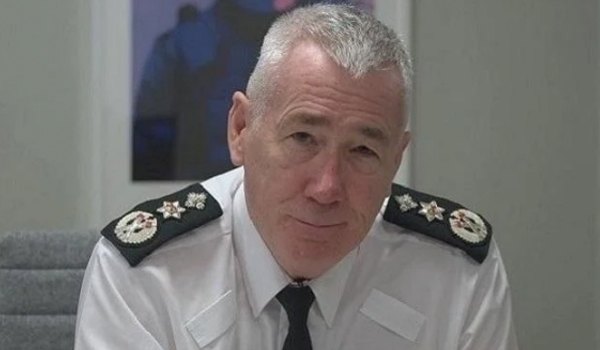
PSNI Chief Constable Jon Boutcher said he “acknowledges and very much welcomes” the publication of the Police Ombudsman’s report examining allegations of abuse of position for sexual purposes.
Mr Boutcher said: “Any abuse of position for sexual purposes is wholly unacceptable. It represents a serious breach of trust and a violation of the standards rightly expected of police officers.
“The Criminal Justice Inspection Northern Ireland in its March 2025 report found that the Police Ombudsman’s handling of abuse-of-position complaints needed to improve and, as this most recent report recognises, by focusing on this issue together we have seen the number of referrals and investigations increase. I welcomed that report and the clear need for both the PSNI and the Ombudsman to robustly deal with allegations of abuse of power.
“While the report identifies serious individual misconduct, it also recognises the significant work we have done to strengthen professional standards, enhance vetting and misconduct reporting processes and ensure learning from past failures.
“We are determined to shine a light on and better understand the true extent of sexism and misogyny within the PSNI to ensure our organisation is as effective as possible. In the wake of the murder of Sarah Everard and the sexual offences committed by David Carrick and Wayne Couzens, both Metropolitan Police officers, the PSNI undertook a review of historical investigations relating to 134 officers over a ten-year period regarding concerns about their conduct. This review made many recommendations and identified gaps in individual investigations and PSNI’s safeguarding response between 2012 and 2022. In addition, a number of thematic issues were identified which have been addressed to ensure organisational learning.
“As a further indication of our utter determination to improve our investigative response to ending violence against women and girls, tackling misogyny, and addressing unacceptable behaviour in the PSNI workforce, I commissioned an independent review of our performance and internal behaviour by Rachel Langdale KC. The Langdale Review examined the PSNI’s operational response to violence against women and girls, it also included an internal examination of sexism and misogyny and the effectiveness of our professional standards processes in dealing with such issues. I will be making the results of that review available.”
He added: “Sexism, misogyny and wider unacceptable behaviours were also an area of focus in our recent Workforce Inclusion Survey conducted in the autumn of 2025. This survey was designed to establish a baseline of inclusion across the organisation, with a core element relating to inappropriate behaviour and discrimination. The findings show that officers and staff understand what constitutes inappropriate conduct and know how to report it. The survey examined the effectiveness of our internal reporting mechanisms, showing that a significantly higher proportion of our workforce would report inappropriate behaviour compared with forces in England and Wales.
“We have reinforced our policy and guidance relating to abuse of position for sexual purposes and we are unequivocal that such behaviour is completely unacceptable and will not be tolerated. In August 2024, we issued a formal Statement of Action/Intent on Conduct and Standards in relation to Violence Against Women and Girls. Reaffirming our zero tolerance for sexual violence, abuse of position for sexual gain, harassment, domestic abuse, bullying or discriminatory behaviour of any kind, including conduct carried out via social media or messaging platforms. Each of our officers and staff have personally signalled their personal commitment to this issue.
“As part of our leadership commitment, we also developed a supervisor briefing note which has been issued across the organisation outlining the warning signs of abuse of position for sexual purposes and the circumstances in which it may arise. These briefings provide practical guidance on early identification and set out clear reporting routes.
“We will work ever harder with the Police Ombudsman and other key external stakeholders, including through the independent Langdale Review, to ensure robust prevention, early identification and decisive action against predatory behaviour. There is no place for those who display such behaviour in the PSNI.
“The vast majority of our officers and staff serve with integrity and dedication. Where standards fall short, we will act decisively. Our focus is on protecting the vulnerable, maintaining public confidence and ensuring transparency and accountability in all that we do.”
Northern Ireland Policing Board chair Mukesh Sharma said: “It is deeply concerning that police predatory behaviour now accounts for 30 per cent of PONI’s most serious investigations and the ‘Abuse of Position for Sexual Purposes (APSP) by PSNI Officers: Analysis and Emerging Findings’ will be a focus of discussion with the chief constable at the Board meeting this week.
“The chief constable has made it clear to the organisation that there will be zero tolerance of police officers or police staff who abuse their position or powers, and following a 2025 report by the Criminal Justice Inspector, a series of actions have been reported to the Board on work undertaken to strengthen internal policies, vetting and resourcing of professional standards. However, legislative amendment is also needed to enable swifter disciplinary action to be taken by the PSNI.
“The Board is currently finalising a revised Code of Ethics for the PSNI which makes it explicitly clear that police officers shall not establish or continue a sexual or improper relationship with any victim, witness, suspect, detained person or defendant arising from their duties.
“Abuse of power is deeply damaging to public confidence in policing and as a Board, we encourage anyone who has been subject to abuse of power by a serving or former officer to contact the office of the Police Ombudsman and make a report.”