

First road safety strategy in a decade aims to reduce deaths and serious injuries on Britain’s roads
The Association of Police and Crime Commissioners (APCC) has welcomed the Government’s “long overdue Road Safety Strategy” but believes it must go further.
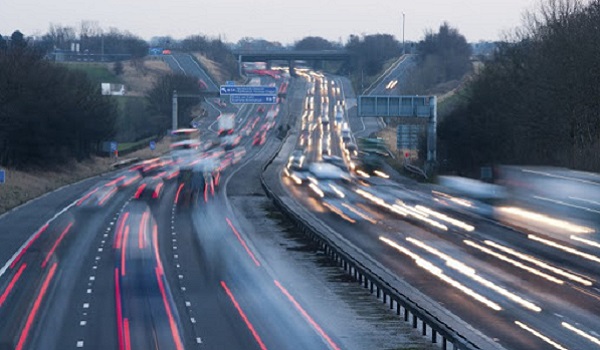
Unveiled on Tuesday (January 7) the safety strategy is the first in more than a decade and aims to save thousands of lives on the nation’s roads by tackling drink-driving, improving training for young drivers and introducing mandatory eye tests for older motorists.
Secretary of State for Transport, Heidi Alexander, said: “Every life lost on our roads is a tragedy that devastates families and communities. For too long, progress on road safety has stalled. This strategy marks a turning point.
“We are taking decisive action to make our roads safer for everyone, from new drivers taking their first lessons to older motorists wanting to maintain their independence. The measures we are announcing today will save thousands of lives over the coming decade.”
The APCC’s joint leads on Roads Policing and Transport, Joy Allen and Philip Seccombe, said: “This long overdue Road Safety Strategy is welcome and reflects the tireless campaigning of bereaved families and road safety advocates who have made it clear that deaths on our roads are not inevitable. Their lived experience, alongside the growing body of evidence must continue to shape delivery if these ambitious targets are to be met.
“As APCC Joint Road Safety leads, speaking on behalf of police and crime commissioners and deputy mayors across England and Wales, we see first-hand the devastating impact of dangerous driving on families and communities, and the vital role local leaders play in turning national ambition into action.
“While we welcome today’s proposals which will improve the safety of young and new drivers, we believe the government can and must go further to implement comprehensive progressive driver licences for young drivers, including time-limited measures such as night-time curfews and restrictions on the number of young passengers. Similar approaches have successfully saved lives in other countries and will contribute to the government’s objective of reducing deaths and serious injuries by 65 per cent by 2035.
“We back government plans for new powers to temporarily disqualify from driving those who are awaiting trial for serious offences, tougher penalties for those who put others at risk by getting behind the wheel of a vehicle without a licence, and mandatory eye tests for drivers over the age of 70.
“The growth in drug-driving concerns us greatly, so we look forward to more information on how the government plans to improve and speed up the process of testing drivers for drugs.”
They added: “Every death and serious injury on our roads is preventable. Delivering this strategy will require ministers to continue listening to bereaved families, practitioners and campaigners, to follow the evidence, and to back these commitments with sustained investment and decisive action.”
The strategy sets out an ambitious plan to reduce deaths and serious injuries on Britain’s roads by 65 per cent by 2035, with an even more stretching target of 70 per cent for children under 16.
Approximately four people die on Britain’s roads every day, with thousands more seriously injured each year, but through targeted action on speeding, drink and drug-driving, not wearing seat belts and mobile phone use, thousands of these tragedies can be prevented.
The Government will consult on lowering the drink-drive limit in England and Wales, which has remained unchanged since 1967 and is currently the highest in Europe.
In 2023, one in six road fatalities involved drink-driving, but a consultation will explore the use of preventative technology, such as alcohol interlock devices and new powers to suspend driving licences for those suspected of drink or drug-driving offences.
This could mean that, in future, some drink-drive offenders might be required to have one of these devices fitted to their vehicle as a condition of being allowed to drive again.
With the number of older drivers continuing to rise as Britain’s population ages, a consultation on mandatory eyesight testing for those over 70 will be launched, while options for cognitive testing will also be developed to protect all road users.
New measures will also target the growing problem of illegal number plates, including ‘ghost’ plates designed to fool camera systems, while also cracking down on uninsured drivers and vehicles without a valid MOT.
The Government’s consultation to reduce the legal drink-drive limit in England and Wales has been welcomed by road safety campaigners.
The proposals are backed by research showing that even small amounts of alcohol significantly increase crash risk. A study found that drivers with a breath alcohol level of 22 micrograms per 100 millilitres of breath (µg/100mL) are eight times less likely to be involved in a fatal crash than those at the current limit of 35 micrograms.
The legal limit in Scotland was reduced to 22 micrograms in 2014.
“But England and Wales remain an outlier with the highest legal drink-drive limit in the developed world,” says Hunter Abbott, managing director of personal breathalyser firm, AlcoSense Laboratories.
“This means we have drivers who are ‘legal but lethal’ on our roads. The evidence is clear – even modest reductions in blood alcohol concentration significantly lower crash risk.
“It would be a simple, effective step towards saving lives and would bring England and Wales in line with international standards.
A survey carried out by AlcoSense in December 2024 to mark the 10th anniversary of the limit being reduced in Scotland found that 79 per cent of Scots believe it has made roads safer. A similar number (77 per cent) think England and Wales should follow suit and 40 per cent report drinking less overall.
“The Scottish data shows that lowering the limit reshapes behaviour,” adds Mr Abbott, who is also a member of the Parliamentary Advisory Council for Transport Safety (PACTS).
“Fewer people drink when they know they will drive and millions avoid risky decisions altogether.
“The UK once led the way on road safety with the first roadside breath test in 1967. We are now lagging behind. In 2026 there is no excuse for laws that allow impaired drivers on our roads”.
The latest government figures underline the urgency of reform. In 2023, a total of 260 people were killed in drink-drive crashes – with 6,310 casualties overall. After years of decline, progress has now stalled. Fatalities have hovered above 200 for nearly a decade.
Commenting on the government’s proposed consultation on drink-drive limits, Edward Grange, partner at law firm Corker Binning said: “Alcohol consumption and inexperience are well-established risk factors. A near-zero limit provides clarity and reduces reliance on subjective judgement. It also brings the UK in line with the limits in EU countries.
“The proposal is a proportionate and preventative response to a known risk. For too long the line “you will be alright you’ve only had one pint” has resulted in drivers taking unknown risks.
“One pint will soon be a pint too many.”
Over the past decade, 22 European countries have made more progress than the UK in reducing road fatalities, causing Britain to slip from third to fourth in European road safety rankings.
This strategy, therefore, sets out a new approach to reverse a decade of stalled progress. The bold strategy adopts the internationally recognised Safe System approach, which acknowledges that while human error is inevitable, deaths and serious injuries are not.
Rather than placing responsibility solely on individual drivers, the system ensures that road design, vehicle safety, enforcement and education work together to protect all road users.
A new Road Safety Investigation Branch will analyse collision patterns and inform prevention strategies, drawing on linked police and healthcare data to identify root causes and target interventions more effectively.
The strategy also mandates 18 new vehicle safety technologies, including autonomous emergency braking and lane-keeping assistance. This will ensure drivers and road users in Great Britain benefit from access to these cutting-edge technologies and support growth by requiring manufacturers to meet the same requirements across Europe.