

Every officer will need ‘a licence to practice’ under Home Office plans
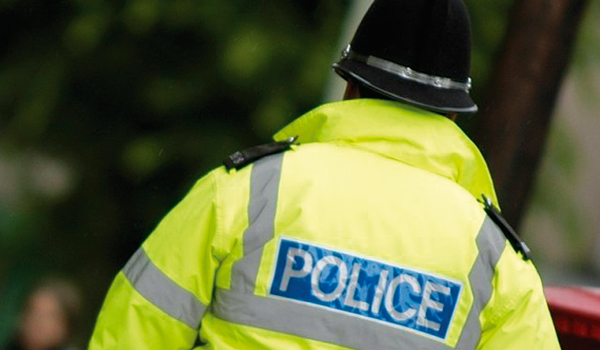
Police officers in England and Wales will be required to hold and renew a licence to work throughout their career or risk being removed from the profession.
The Home Office says this is so officers learn new skills as criminal techniques evolve.
“Policing is an ever-changing profession – officers must adopt new skills to stay at the top of their game and keep pace with new methods adopted by criminals,” it added.
The Home Office says the Licence to Practice will ensure officers are best equipped with problem solving and technological skills they need to catch more criminals.
Drawn from other professions such as lawyers and doctors, officers will have to demonstrate that they have the skills needed to fight crime. Those who fail to reach the required standard, following opportunities to try again, will be removed from the profession.
Currently, 43 forces operate different training, supervision and performance systems.
The Home Office says these reforms will enable officers to develop their skills throughout their career. The new licensing regime will set clear standards that will equip officers to fight more crime and catch more criminals.
Crime and Policing Minister, Sarah Jones, said: “Every police officer needs to remain match-fit to protect their communities. As crime evolves, we expect police to evolve more quickly.
“The Licence to Practice will equip every officer with the skills and capabilities to do the job – whether new to the force or a policing veteran.
“Under these reforms, police forces will catch more criminals and protect their local communities.”
The programme will be developed with police forces and delivered in phases. It will set clear standards in areas such as violence against women and girls and neighbourhood policing, alongside essential leadership expectations for every member of staff.
It will introduce a clear structure for continuous professional development. Officers will know the training required – supervisors will be able to confirm that skills and support are in place, and forces will follow one national approach to performance and supervision.
Matt Cane, General Secretary of the Metropolitan Police Federation, said: “As with any upcoming police reforms these need to be properly discussed and debated and the devil will be in the details.
“Officers in London will have more questions than they have answers on these proposals. Who will pay for the licences? What happens if officers ‘fail’? Are the warrant cards we proudly carry already not our licence to practice?
“And if it all goes through, what will this mean for the Office of Constable?
“We all want the highest standards in policing but we fear this will be an expensive, time-consuming, tick-box exercise and become bureaucratic and burdensome on the already stretched Metropolitan Police Service.
“Metropolitan Police training is already inadequate so we do wonder how on earth this will all practically work? And is the vetting officers go through not already enough?
“We also wonder if this proposed licence and the need to ‘pass’ will apply to all ranks – including chief officers?
“The Metropolitan Police Federation can assure colleagues that we will be seeking answers to these many questions as the process proceeds.”
Suffolk Police Federation says that while it backs any measure that strengthens policing, it stresses officers must be given genuine time and support to meet those requirements.
Branch secretary Ben Hudson says that implementing a licence to practice for police officers might help strengthen the organisation, enhance public confidence, and support officers in remaining skilled and effective throughout their careers.
However, he stressed that a licence to practice will only succeed if it is backed by genuine support for officers, not increased pressure on an already stretched workforce.
Mr Hudson said: “Officers want to develop their skills and provide the best possible service to the public.
“What they cannot continue to carry is the sense of guilt that comes with stepping away from frontline duties to complete training.
“Too often, officers undertaking mandatory learning do so knowing that their absence creates a gap elsewhere – a gap that colleagues must absorb in an already stretched system. That pressure discourages meaningful engagement with training and undermines the very purpose of professional development.
“If a licence to practice is to be effective, officers must be given protected, ring-fenced time to complete required learning during working hours, without being made to feel that they are letting their team or the public down.
“However, there are so many questions unanswered here. Until we see all of the details, it would be unfair for us to support a licence to practice or not.”
He added that for a licence to practice to be successful, forces must review their operating models to ensure that training and professional development are treated as essential parts of policing, not an operational inconvenience.
He explained that this approach includes moving away from over-reliance on web-based learning alone and from providing training that officers do not have the time or capacity to complete properly.
“If officers are required to renew a licence to practise annually, that requirement must be achievable within normal working time and without negatively impacting operational policing,” he said.
“A licence to practice must support officers, not place them in an impossible position where expectations increase but time and resources do not. Officers should not face – or fear they face – professional consequences because systemic pressures prevent them from accessing training.
“Strong foundations must be put in place nationally to ensure the process is fair, consistent, and realistic across all forces.”
On Monday, the Home Secretary is expected to announce the largest reforms to policing since the police service was founded two centuries ago in a White Paper titled ‘From local to national: a new model for policing’.
This includes providing His Majesty’s Chief Inspector of Constabulary Sir Andy Cooke with statutory powers to issue directions when police forces fail to act on his recommendations.
Sir Andy said: “Where a police force is failing the public, there must be a clear, fair system to make sure concerns are acted upon. The inspectorate is a vital part of that system.
“I have called for the inspectorate to have stronger powers, and I welcome the Government’s commitment to this. These reforms will help make sure underperformance is more quickly addressed whilst supporting forces to respond to our recommendations more effectively, so that every community gets the policing it deserves.”