Who audits the auditors?
Filming police in public is lawful, and often valuable. But the law governing it was written for casual users, not for an industrialised social media economy. John Coxhead asks where the line should now sit.
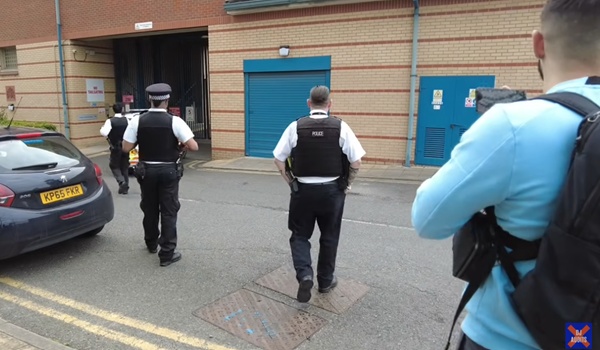
It has become increasingly common for auditors to film police personnel, buildings and equipment, often placing the footage on social media. Although it is generally lawful to film using your phone in a public place, given the potential harassment this can cause, is it time to reconsider the existing rules?
Firstly, what are the current rules? In the UK, there is generally no law preventing someone from photographing or filming in a public place if what they are doing is otherwise lawful. People in public normally have a reduced expectation of privacy. Simply recording someone in a street, park or town centre is not usually illegal.
It is interesting, however, to contrast filming via a phone with filming via CCTV. The argument is that CCTV is different because it is considered a systematic form of surveillance, involving continuous or long-term recording, capturing large numbers of people, storing footage, and searching, sharing or analysing that footage later — potentially using technologies such as facial recognition.
Because CCTV processes personal data on that ongoing basis, operators may be deemed data controllers, and the implications of that involve statutory obligations under UK GDPR and the Data Protection Act 2018. An operator needs a legitimate reason for recording, must record only what is necessary, keep footage secure, delete it when no longer needed, and inform people they are being recorded.
Strict rules
Police themselves carry cameras mounted on their stab-proof vests. These have to be used according to strict rules, similar to those governing CCTV operators. Footage can be of huge evidential value — the Henry Nowak case being a recent example, where recorded material exposed conduct that would otherwise have gone unexamined. That this was police body-worn video rather than phone footage is worth noting, but it cuts both ways: the same argument for the evidential value of recording applies whoever is holding the camera.
The line between the rules afforded to CCTV and to phone filming is murky, particularly as CCTV can itself be mobile and is likely to expand through the use of drones. If the purpose is deemed to be “surveillance” — which means, etymologically, to watch — different rules apply. Enter any sort of private space and filming is extensive if not universal, from supermarkets and shopping centres, including car parks, to dashcams and doorbells. Is it fair that CCTV carries all those obligations while phone filming carries none? Are the rules concerning CCTV too stringent, or those around phone filming too lenient?
The Information Commissioner’s Office publishes guidance on handling personal information through video surveillance, covering CCTV, automatic number plate recognition, body-worn video, drones, facial recognition technology, dashcams and smart doorbells. Yet phones are regarded as somehow different, even though the principles of purpose, use and motive are surely universal.
There is a balance to be discussed between accountability and transparency on one side and privacy and interference on the other. There are sound reasons for recording to gather evidence and intelligence for a policing purpose, and auditors often claim they film as a matter of public interest — though it is worth noting that social media subscription is linked to profit.
On the one hand, footage of George Floyd served an important civic function evidentially. On the other, some auditors appear to weaponise filming in order to goad and humiliate officers on social media, as a form of entertainment. When police interact with someone in a public place, it is often in distressing circumstances involving high pressure and stress, and involving third parties as well as police personnel. Is it fair to allow filming for what amounts to social media voyeurism?
For television programmes, camera crews often ride along and film too, but operate under restrictions about what they can and cannot use — even though, like social media, television is also about entertainment and profit.
Social media
Many auditors justify their postings on the basis that filming in public is usually lawful. Yet where there is repeated targeting of individuals, conduct that amounts to a course of harassment may engage the Protection from Harassment Act 1997, whether the person targeted is a member of the public or a police officer. Filming through windows, or conduct causing alarm or distress, may raise separate issues. Perhaps the notion that auditors can do whatever they want needs testing.
Obstructing a police officer is a criminal offence under section 89(2) of the Police Act 1996, which covers resisting or wilfully obstructing an officer in the execution of their duty. It is worth being clear that this requires a positive act making it more difficult for the officer to carry out their duty; filming alone, without physical interference, will not usually meet that threshold, and officers who assume otherwise risk making a bad situation worse. Police may in any event be reluctant to use the power, since doing so can be perceived — ironically — as heavy-handed, or as an attempt to hide something. Yet aggressive intrusion into operational policing does have an impact, and the notion that police cannot act without fear or favour because of how something might look on social media is a slippery slope for civil society.
Current law seems more preoccupied with the collection, storage and ongoing processing of personal data than with the phone in someone’s hand. Phones are now essentially mobile cameras, but much of the legislative principle comes from a bygone age, and the presumption remains that a phone user is a casual user. What we actually see on social media is an industrialised use of phone footage, deployed in any number of ways. Is it time for a parliamentary debate about where the line in modern society should reasonably be drawn?
Dr John Coxhead SFHEA, FRSA is Professor of Policing at De Montfort University Business School. A version of this article first appeared on the EMPAC website.