Headcount is not capacity
The MPS has lost more than 3,300 officers since 2023, but the headline figure hides a bigger problem. PFEW National Board Member Paul Matthews argues that policing must publish how many officers are genuinely available, before narrowing services becomes rationing.
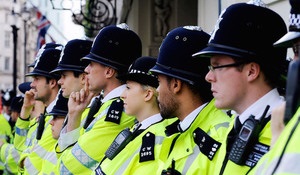
London is approaching a point that policing has traditionally been reluctant to announce – the point at which there are simply not enough officers left to do the job safely.
For years, falling capacity has been dressed up in the language of reform, efficiency and prioritisation. Police forces have been told to modernise, collaborate, digitise, civilianise and do more with less. The Met Police has done all of that. Yet the numbers are becoming impossible to disguise.
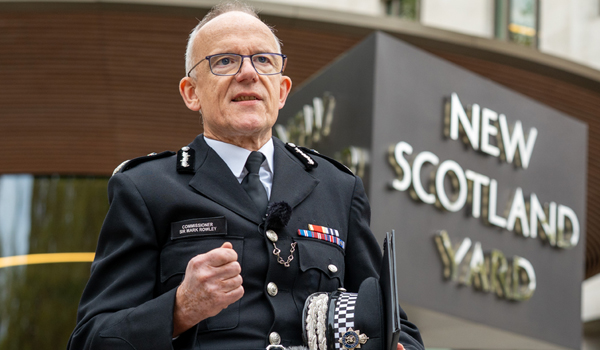
The Met has lost more than 3,300 officers since April 2023. It is now operating with a little over 31,000 officers, despite previously assessing that London requires something closer to 38,000 to have an effect. At the same time, it faces yet another substantial financial gap and another round of “tough choices”. The Commissioner has warned that services may “have to be narrowed” and activity “concentrated on the highest risk”.
This should alarm people more than it has done.
“Narrowing the scope of services” is not an efficiency saving. It is a polite way of saying that things the public reasonably expect the police to do will done more slowly, less thoroughly, or not done at all. There is a point at which prioritisation stops being strategy and becomes rationing.
The national figures make the London position even harder to dismiss. Home Office data published in July 2026 showed police officer numbers across England and Wales had continued to fall. During 2025/26, more officers left policing than joined it.
The Met’s finance chief expects numbers to remain broadly stable this year and the deputy mayor says extra Home Office funding has protected around 1,610 officer posts. Over the same period police staff rose from 10,359 to 11,558 and PCSOs from 1,208 to 1,389.
But even these figures tell only part of the story, because policing continues to rely on one of the most misleading measures in public-sector management – headcount.
Nominal strength
An officer on the payroll is not necessarily an officer available to answer a 999 call, patrol a neighbourhood, arrest a violent suspect, carry a firearm, investigate a rape, manage a sex offender or police a major event. The Met’s nominal strength far different to its deployable strength.
In May 2025, Met data showed 192 officers suspended and 686 on restricted duties because of conduct or complaint matters. Suspension is not a finding of guilt and restriction does not mean misconduct has been proven. Fairness and due process remain essential. But from a workforce perspective the effect is obvious, some of those officers cannot be deployed, while others cannot perform the full range of duties.
At the same time, the Met is removing officers and staff whose behaviour is incompatible with policing. More than 1,500 officers and staff have left the organisation over the past three years as part of its drive to raise professional standards.
But honesty requires us to acknowledge that raising standards has a workforce consequence. If hundreds of officers are suspended, restricted, dismissed or otherwise removed, that must also be factored into operational planning. You cannot celebrate the removal of unsuitable officers while pretending their disappearance has no effect on capacity. The same is true of disability and adjusted duties, although the issue is very different.
Being disabled or on adjusted duties does not mean an officer is incapable of making a valuable contribution, far from it. Most carry significant workloads in investigation, intelligence, safeguarding, training, case management and specialist support. Many bring decades of knowledge that policing can ill afford to lose.
A January 2024 Met snapshot recorded more than 4,200 individual officers on adjusted or recuperative duties. The Met has since acknowledged that the number of adjusted-duty officers has been increasing and that suitable roles are increasingly difficult to find. One might ask, why this is the case but that is for another day.
This creates an uncomfortable policy dilemma. Recent national discussion has explored new exit routes for officers who are not fully deployable but do not qualify for ill-health retirement. Within the Met, Federation and internal workforce channels have indicated that an incentivised departure initiative for officers with long-term restrictions attracted more interest than originally anticipated, although the precise figure has yet to be publicly verified.
On the surface, encouraging restricted officers to leave might appear to improve deployability. It may do the opposite. If an experienced officer on adjusted duties is managing investigations, intelligence, safeguarding or casework, their departure does not make that work disappear. Unless the role is replaced by police staff, it falls to somebody else. In many cases that somebody else will be a fully deployable officer who is then pulled away from the frontline.
That is the absurdity of managing police capacity by headline numbers. We risk removing experienced people from useful roles, then using fully deployable officers to fill the gaps they leave.
Police staff reductions or vacancies create exactly the same problem. Calls still have to be answered. Exhibits still need managing. Case files still need preparing. Disclosure still needs completing. Victims still need updating and Intelligence still needs processing.
When police staff capacity disappears, the work does not evaporate. It migrates. And too often, it migrates back to warranted frontline officers.
Rest days
The clearest evidence that the system is already running too hot can be found in rest days. As of March 2026, Met officers were owed more than 215,000 rest days — the equivalent of 589 years of accumulated time off.
Every cancelled rest day represents an occasion when the organisation did not have enough rostered capacity and used an officer’s recovery time to close the gap. Occasional cancellations are part of policing. Hundreds of thousands of outstanding days suggest the exceptional has now become the norm.
Policing is not an occupation in which fatigue is a minor inconvenience. Exhausted officers drive at speed, carry firearms, make arrests, assess threat, decide whether to use force and deal with people at the worst moments of their lives. Fatigue degrades judgement long before it produces a visible collapse.
That is why recent failures in the criminal justice system should be examined through a capacity lens, even where staffing cannot be claimed as the direct cause.
The conviction of Simon Levy in August 2026 was particularly disturbing. Levy, already a convicted sex offender, murdered two women and committed further serious sexual offences. After his arrest on suspicion of the first murder, he was released while enquiries continued and went on to attack more women before killing again. Police and prosecutors have acknowledged serious failings, and the Met referred aspects of its own management of Levy to the IOPC.
It would be irresponsible to claim, without evidence, that police cuts caused those failures. But it would be equally irresponsible to ignore the wider question the case raises.
High-risk offender management is not delivered by an algorithm. Public protection is not an abstract process. Investigation, supervision, intelligence-sharing, case preparation and risk assessment depend on skilled people having enough time to notice what is important and then to act on it.
If policing is now going to withdraw from lower-priority activity so it can concentrate on the “highest risk”, then the public is entitled to ask whether there are enough people left even to do that safely.
That is the argument we seem to be avoiding. We continue to debate establishment, headcount and budgets when we should be discussing effective deployable strength.
The public should be told, in meaningful terms, how many officers are genuinely available by shift, location and capability. How many can respond? How many can investigate? How many can supervise? How many are firearms trained? How many are available for public order? How many are absent, restricted, suspended, training, abstracted or working in roles that do not require police powers?
That information should sit alongside workloads, vacancies, overtime and cancelled rest days. Only then can anyone credibly claim to know whether London has enough police to keep people safe.
The most dangerous assumption is that because the Met has not visibly collapsed, its staffing must be adequate. Public services can survive for years on goodwill, overtime, cancelled leave, exhausted supervisors and employees quietly absorbing more work.
Risks identified
Failure rarely begins with a dramatic institutional collapse. It begins with unanswered calls. Delayed investigations. Overloaded detectives. Inexperienced teams. Reduced supervision. Single-crewed officers sent to incidents that should require two. Neighbourhood teams stripped to plug emergency gaps. Safeguarding queues that grow faster than they can be cleared. Risks identified but not acted upon quickly enough.
By the time the failure becomes undeniable, the damage has already been done.
London has lost more than 3,300 officers since 2023. It faces further financial pressure. It owes officers more than 215,000 rest days. Hundreds are suspended or restricted. Thousands are working with medical adjustments that limit the duties they can perform. Experienced officers continue to leave. More cuts are being discussed. Services now may be narrowed.
At some point, “doing more with less” becomes “doing less with less”. We may already have crossed that line.
The Met’s finance chief expects numbers to remain broadly stable around 31,250 this year. Over the same period police staff rose from 10,359 to 11,558 and PCSOs from 1,208 to 1,389. The deputy mayor says extra Home Office funding has protected around 1,610 officer posts, although the Met still needs to reduce its overall workforce.
The question for politicians and police leaders is no longer how many officers they can afford to remove without provoking a headline. It is how few genuinely available officers are left to operate before policing becomes unsafe for the public and for the officers still expected to hold the system together.
If nobody can answer that question, then perhaps the cuts should stop until somebody can.