

Current knowledge
Factors like water depth, direction of flow and decomposition can make locating bodies in water notoriously difficult. However, an ongoing study hopes to aid investigations by improving the services understanding of how these factors influence the movement of human remains.
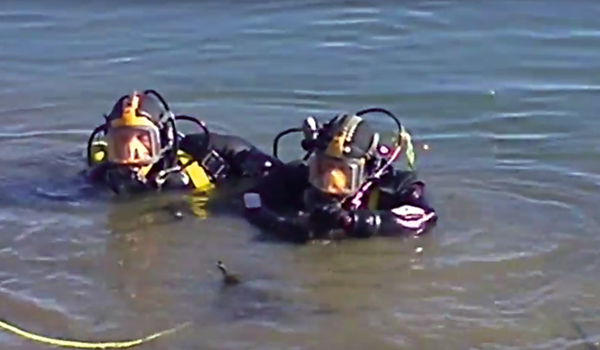
After spending Christmas 2015 with her family, 59-year-old Sally Allan disappeared early on Boxing Day, giving no indication of why she had left. After an exhaustive search, Northumbria Police found her body in the River Tyne on February 4. Her family believes that she took her own life. The forces efforts to find Ms Allan were commendable. However, according to the World Health Organisation, more than 40 people drown every hour worldwide a death rate that is just half that of malaria and two thirds of malnutrition. Drowning is one of the top ten most frequent causes of death for people aged under 24. In the UK alone, almost nine in ten people who go missing after a night out, who are found deceased, are discovered in a body of water. To date, very little research has been conducted into how bodies act in water. What exists often relies on data from pathologists and coroners, but this is retrospective and has not been designed specifically for the purposes of search and recovery and investigative learning. By improving its understanding of this, the police service could make significant improvements to underwater investigations and victim recovery. Learning more about the behaviour of bodes in water could reduce both the cost and duration of investigations and help provide an earlier resolution to missing persons cases. The Body Recovery From Water Study In 2007, Sergeant Lorna Dennison-Wilkins was selected to lead Sussex Polices specialist search unit (SSU). She quickly found that when the team had an idea of where a missing person had entered the water, it could usually combine factors relating to the water and the physical attributes of the missing person to determine where they would most likely be found. Most SSUs will have similar knowledge. However, this understanding of how a bodys movement might be influenced was not being formally recorded. As a result, in 2009, Sgt Dennison-Wilkins set up the Body Recovery From Water Study (BRFWS), and since then she has been compiling a database. The BRFWS database comprises responses to a survey, through which participants provide details of cases they have worked on. This include variables such as type of water, depth, water temperature, bodys age, gender and weight, any clothing worn, whether the body was weighted down and the location in the water it was found. The survey is available through the BRFWS website and can be downloaded or completed online. Eight years on, the BRFWS has grown significantly. As of April 2017, Sgt Dennison-Wilkins has collated information from 278 cases, with another 12 that still need to be added. The study has received contributions from across the globe, including Europe, New Zealand, Australia and the US. Agencies such as the Border Force, police, fire and voluntary search teams have provided their expertise. While analysis of the data is still in its infancy, early results have revealed some interesting patterns. A statistical breakdown in 2015 showed that in 28 per cent of cases, the bodies were found just a metre or less from the location they had entered the water or drowned, and just under a fifth had travelled more than 100m away. Fifty-six per cent were found having sunk to the bottom, and 30 per cent were on the surface. Other results have suggested that a victims age can also affect how their body reacts. Those aged over 40 appear more likely to float than younger victims. The more buoyant a body is, the more susceptible it is to water variables such as flow, so those that float are more likely to travel further. Although the exact reason for this has not been determined, Sgt Dennison-Wilkins has formed her own hypothesis: My theory is that you gain more body fat as you get older, so therefore you may become more likely to float. Medical studies suggest this theory could be close to the truth. The resting metabolic rate the speed at which energy is used while the body is stationary decreases as the body gets older, so over-40s find it more difficult to burn fat. C