

MPS still has ‘systemic issues with racism, misogyny and homophobia’, review finds
More than three years after the Baroness Casey Review, the Metropolitan Police Service (MPS) is “different, but not yet different enough”, an independent review has found.
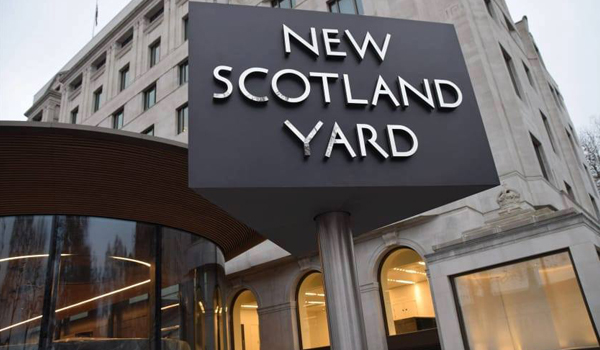
The Fairfield Independent Review has concluded that while the MPS’s commitment to reform has generally been strong and implementation often substantial, its embedding has been much less consistent, and the impact of its reforms so far has – too often – been limited or mixed.
The fundamental, systemic issues of racism, misogyny and homophobia identified by Baroness Casey remain, the Review said, adding: “The Met still struggles to acknowledge racism as a structural problem rather than something people can be trained out of. Many women in the workforce and across London are not yet confident that change is substantive rather than presentational, and the lower trust that LGBT+ communities have in the Met has not improved.”
As the report puts it: “Effort is not the same as effect.”
Dr Gillian Fairfield was jointly commissioned by the Mayor for London and MPS Commissioner to assess progress against the recommendations of the Casey Review, whose final report in March 2023 report shook the force and the public.
Following 11 months of fieldwork, the chair and Review team saw some of the best of policing and some of the worst. They met outstanding officers and staff, many thoughtful and courageous leaders, highly professional investigators and teams policing London with skill and humanity, often in challenging circumstances. But they also heard and observed behaviour, culture and organisational failings disturbingly familiar from the Casey Review.
The 389-page report describes an organisation that has met hundreds of recommendations from various reviews, inquiries and inspections with an enormous volume of activity – to the point where activity has itself become a risk.
“Programmes are stacked on top of one another, and the Met makes new changes before earlier ones are embedded,” said the report. “The Met can become focused on managing its reputation by showing it has responded to a recommendation, rather than asking whether the underlying problem has actually been solved.
“The behaviours Baroness Casey identified – putting a positive spin on things, blaming individual ‘bad apples’, and talking up future actions as if they were already implemented – have not changed sufficiently. Neither has the Met’s institutional defensiveness, which remains deeply ingrained.”
The report found that internal governance remains “too dependent on a small group of executives, independent non-executive challenge is too weak, and too much still depends on the Commissioner”.
In the Review’s opinion, “the only scrutiny the Met really fears is from the media”. Rather than treating constructive challenge as an inconvenient disruption, the Review calls on leaders to accept that some issues need to be acknowledged as “uncomfortable, understood and reflected upon – not immediately rebutted or minimised” – before working with partners to address them.
Officers and staff described trauma, exhaustion and low morale, and the cumulative impact of change on them is not always understood. Too many remain unconvinced that the organisation is well led or that concern for their wellbeing is genuine.
The report warns that “a workforce in survival mode will eventually transmit that experience to Londoners”.
Victims of crime also told the Review that they experience the MPS as a system rather than a service: they are forced to repeat themselves, receive poor updates, experience uncertainty and variable support.
Bereaved families raised serious concerns about homicide and death investigations, including false assumptions, a lack of professional curiosity and empathy, and dismissal of their concerns. The experience of some victim-survivors of police-perpetrated domestic abuse shows an organisation perpetuating additional harm, not preventing it.
The Review is clear that genuine improvement has been made: vetting and integrity controls are stronger, the MPS is taking firmer action against those who fall below the standards required, and the application of Operation Soteria principles to rape investigations has contributed to materially improved outcomes.
“When it concentrates on a problem, listens to expertise and provides sustained leadership, the Met can improve significantly,” the Review noted.
The Review concludes that three years is not long enough for the MPS to have completed every cultural or behavioural change recommended by the Casey Review in an organisation of this scale. It is enough, however, to expect clear ownership, coherent sequencing, fair implementation and evidence that change is taking hold.
Dr Fairfield said: “A lot of work has been carried out to reform the Met since Baroness Casey’s seismic report was published in 2023, and some of it is working: tougher vetting, firmer action on misconduct, and the adoption of Operation Soteria principles to rape investigations. But the evidence from my extensive engagement with Londoners and members of the Met workforce is clear: the organisation must address the remaining root causes to ensure progress does not stall or, at worst, it continues to cause harm.
“The Met has largely done the more straightforward, mechanical parts of reform. The genuinely difficult work is still to come. Being uncomfortable is, I’m afraid, part of the job of reform. If the Met tries to move on too quickly – to dismiss, minimise or attempt to discredit feedback – it misses the most meaningful opportunities to improve.”
MPS Commissioner Sir Mark Rowley said: “I would like to thank Dr Gillian Fairfield and her team for the challenge and insight they have brought to this Review, and the many Londoners, community representatives and members of our workforce who contributed to it. This report and the ten recommendations that we accept examines exactly the issues we wanted to test and will help us with our next stage of reform.
“Four years ago, when I took over as Commissioner, the Met was in one of the most difficult periods in its history. The Casey Review exposed serious failings that had developed over decades and demanded urgent action. This follow-up Review recognises the scale and pace of change since then. Standards are higher, performance is stronger, violence is down, criminal justice outcomes for victims of sexual violence are amongst the highest nationally, and London is safer. It also highlights how such dramatic change takes a toll on the officers and staff of the Met which we must not forget.
“For Londoners who rightly expect to see meaningful change and for colleagues who have worked so hard, I am pleased that Dr Fairfield recognises the scale of what has been delivered so far and the difficult decisions taken along the way. We have undertaken the largest integrity overhaul in British policing history, strengthened vetting and misconduct systems, removed more than 1,800 officers and staff who fell below the standards expected of them, and transformed our approach to rape investigations, leading to improved outcomes for victims. While we must continue to be relentless, this reflects real progress made through the commitment and determination of our people.
“However, Dr Fairfield lays out starkly that the experience of too many victims is still not as good as we would wish it to be. She reminds us that trust in the Met among black communities and LGBT+ communities is still trailing behind other Londoners and that the work to close those gaps and fulfil our aim of eliminating discrimination in all we do starts with listening and requires sustained commitment and structural change.
“The progress we have made is a credit to the professionalism, resilience and determination of our officers and staff. They have delivered extraordinary change while continuing to protect London through rising demand, significant financial pressures, unavoidable workforce reductions and a criminal justice crisis. I know this report will only further their determination to deliver the continued change Londoners seek and deserve.”
The report makes ten strategic recommendations the MPS must do, including:
- Define its culture and count people in. Much of the Met’s cultural reform has understandably focused on identifying and removing unacceptable behaviour. This is absolutely necessary, but insuffi cient. The MPS cannot sack its way to a good culture.
- Rebuild governance by establishing a genuinely strategic Management Board, clearly distinct from the MPS’s Executive Committee, with substantially stronger independent non-executive membership and potentially an independent chair.
- Evolve its leadership model for the next phase, moving from a predominantly crisis-driven, command-and-control reform model to leadership that is more responsive to context.
- Reflect, prioritise and sequence, radically reducing the number of simultaneous priorities. Closing a recommendation should never become more important than solving the problem that generated it.
- Be braver about racism and disproportionality. The MPS should act structurally, not transactionally, on racism and other discrimination. The diagnosis is clear; no more analysis is needed – it must now act decisively.
- Redesign victim care around victims’ end-to-end experiences of the MPS. The MPS should appoint experienced external expertise at Executive Committee level to work with victims, advocates, frontline offi cers and partners to map those experiences. A Victims Strategy will support this work, but a new strategy alone will not deliver it.
- Make wellbeing a core operational priority, with trusted local support readily available, particularly to offi cers and staff repeatedly exposed to trauma.
The Review also asks Government to consider whether the corporation-sole model (where all authority rests with the Commissioner) remains appropriate for an organisation of the MPS’s scale, complexity and national importance.
The MPS said it accepts the Review’s ten recommendations and will use them, alongside the forthcoming HMICFRS Peel inspection and Angiolini Inquiry, to shape the next phase of reform.
It said: “As the Review notes, three years on from Casey the Met has made progress, the challenge now is no longer simply driving change, but ensuring change is embedded and sustained. The next phase will therefore focus on consistency, delivery and lasting impact for Londoners, so we meet Dr Fairfield’s challenge to us.”