
Buyer beware
One in three drug samples tested in Wales over the past year contained something other than expected, and a newly detected opioid class means the risks for seizing and handling officers are shifting fast.
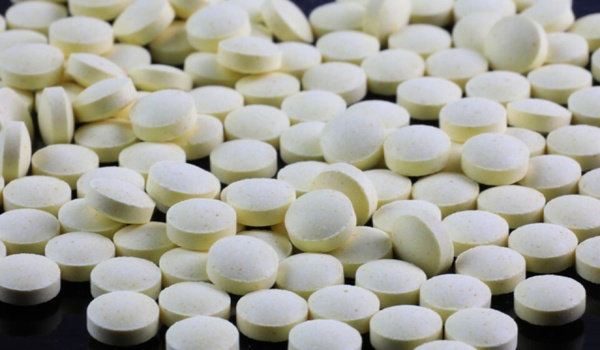
New data from the Welsh Emerging Drug Identification Service (WEDINOS) shows just how unreliable visual and market cues have become for identifying what’s actually in a seized substance — a problem with direct implications for officer safety, custody procedures and drug-driving enforcement.
WEDINOS, run by Public Health Wales, analysed 8,209 anonymously submitted samples in the year to March 2026, up from 8,032 the year before. Among samples where the buyer had stated what they believed they’d bought, 36.6 per cent did not contain the expected substance, and a further 7.7 per cent contained the intended drug alongside additional psychoactive substances.
Benzodiazepines remained the most commonly identified class for the eighth consecutive year, with 22 different types detected compared with 19 the year before; diazepam was the single most common substance found. Among vape liquids sold as THC, CBD or cannabis products, 43 per cent instead contained synthetic cannabinoid receptor agonists (SCRAs, commonly known as spice).
For the first time, WEDINOS identified a group of high-potency synthetic opioids known as orphine analogues, found in 18 samples, some in heroin submissions alongside veterinary sedatives; nitazenes — another synthetic opioid group — were identified in 110 samples.
Rick Lines, Head of Programme for Substance Misuse at Public Health Wales, said: “Our work at WEDINOS over the past year demonstrates again the continuing volatility of illicit drug markets, and the high level of substitutions within the market that may increase the risk of ill effects and accidental overdose. In particular, the growing detection of high potency orphine analogues, some of which have never been seen by WEDINOS before, continues to highlight concerns about the presence of high potency synthetic opiates in the UK drug market.”
International monitoring bodies have flagged orphines (benzimidazol-2-ones) as an emerging successor class to nitazenes, with detections tracked in the UK, US, Europe and Canada as manufacturers respond to earlier scheduling of nitazene compounds.
Fourteen nitazene compounds are already controlled as Class A drugs under the Misuse of Drugs Act 1971 (Nitazenes) Order 2024; officers should expect the same trajectory for orphine analogues as classification catches up with detection.
Unpredictable potency changes the risk calculus at the point of seizure and in custody. The Association of Police and Crime Commissioners has noted that naloxone use by officers in England and Wales doubled over the past year, with 1,232 administrations recorded since June 2019 and a 13 per cent year-on-year rise to 495 in the year to December 2024 — figures that predate this year’s orphine detections and are likely to keep climbing.
Forces already running synthetic opioid incident response plans — Leeds and Greenwich among them — have built local intelligence-sharing and naloxone-distribution protocols around nitazenes specifically; those plans will need extending to cover the newer orphine class, which won’t necessarily show up on existing rapid test kits.
The substitution problem also complicates casework beyond opioids: with a third of samples not matching what was sold, exhibits officers and forensic submissions teams may increasingly need to flag discrepancies between what a seizure was charged as and what lab analysis later confirms — relevant to disclosure and to drug-driving cases where the active substance, not the presumed one, determines the offence.