Measuring what matters in modern policing
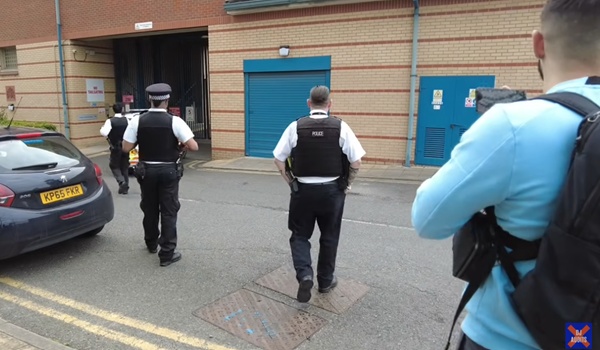
Crime statistics remain essential, but they cannot fully explain how communities experience policing. PFEW National Board Member Paul Matthews argues that forces should judge success not only by what is measured on performance dashboards, but also by whether the public feels protected, sees officers in their neighbourhoods and has confidence in local policing.
Policing has become increasingly fluent in the language of dashboards, data and digital transformation.
We measure response times, arrests, detections, crime outcomes, risk scores, demand, productivity and dozens of other performance indicators. These measures are necessary, but they have also encouraged a narrow managerial view of policing in which organisational success is defined principally by what can be counted.
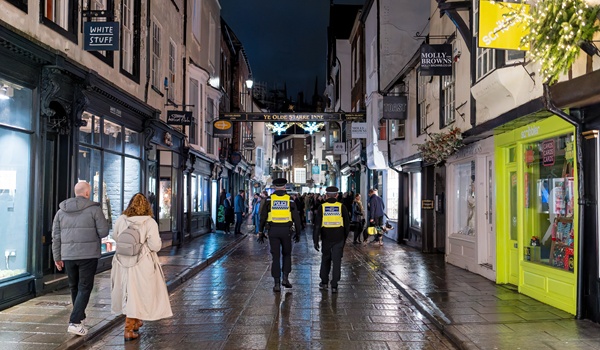
The difficulty is that the public do not experience policing through a dashboard. They experience it through what happens outside their front door. They notice whether officers are present in their neighbourhood, whether antisocial behaviour is challenged, whether someone responds when they call and whether they receive an update after reporting a crime. They form judgements from their own experiences, what they see happening around them and what they read in newspapers or encounter through social media.
A police force may therefore be able to demonstrate that certain categories of crime have fallen while the people it serves remain convinced that their community has become less safe. Both propositions can be true at the same time.
This is the central leadership challenge. Crime must be reduced, but policing must also be seen, experienced and believed to be effective.
When counting replaces understanding
The expansion of performance data was intended to improve accountability and help leaders allocate scarce resources. Properly used, data can identify repeat offenders, highlight vulnerable locations, expose unequal treatment and direct officers towards serious harm.
The problem arises when the measurement system becomes the mission.
What is easily counted begins to receive the greatest organisational attention. Arrests, recorded crimes and response times fit neatly into a dashboard. Reassurance, familiarity, local knowledge and meaningful conversations with residents are harder to quantify. Consequently, the work that builds confidence can become organisationally invisible.
Police leaders may then conclude that performance is improving because the graphs are moving in the right direction, even when the public encounter a very different reality.
The national evidence should concern us. For the year ending March 2025, only 49 per cent of respondents believed their local police were doing a good or excellent job. Although 67 per cent expressed confidence in their local police, this remained considerably below the level recorded a decade earlier. Just 11 per cent reported seeing an officer or Police Community Support Officer on foot patrol at least once a week, compared with 29 per cent in 2015 and 39 per cent in 2011 (Office for National Statistics, 2025).
These figures do not prove that declining visibility has caused declining confidence. Public attitudes are influenced by victimisation, neighbourhood conditions, police conduct, media reporting and wider social and political events. Nevertheless, the disappearance of visible policing from many communities cannot simply be dismissed as irrelevant.
London’s statistical success and perceptual problem
London demonstrates the tension particularly clearly. The Metropolitan Police recorded 97 homicides in 2025, the lowest total for eleven years. The homicide rate per head of population was reported as the lowest since comparable records began, while violent incidents resulting in injury also fell substantially. These are significant achievements that reflect difficult and often unseen investigative, intelligence and preventative work.
However, those achievements do not automatically determine how Londoners feel.
People see phone theft, shoplifting, aggressive begging, drug use, disorder on public transport and antisocial behaviour in town centres. They see businesses placing goods behind locked screens and security guards standing where police officers once stood. They read about serious crimes, misconduct cases and institutional failures. Most importantly, they frequently see no visible police response to the behaviour taking place around them.
Telling people that the statistics show they are safer is unlikely to reassure them when their own observations suggest that public space is becoming less controlled.
It can also sound dismissive. The message received is not that the police have successfully reduced serious harm. It is that the public are wrong to feel as they do.
This is where leadership has too often failed. Public concern has been answered with another graph, another press release or another technological announcement. Meanwhile, the everyday signs of guardianship have steadily disappeared.
London’s own public-attitude evidence illustrates the problem. In April 2025, 74 per cent of respondents said the Metropolitan Police was an organisation they could trust, but this remained below the 86 per cent recorded in 2018. Trust also varied considerably across the capital, ranging from 59 per cent in one borough to 82 per cent in another.
A city can therefore become statistically safer in particular respects without producing a corresponding improvement in public reassurance.
What New York can teach us
Comparisons between London and New York must be treated cautiously. Criminal offences are classified differently, recording practices vary and public-attitude surveys do not ask identical questions. It would be misleading to present a single league table declaring one city safer than the other.
There is, however, an instructive contrast. London recorded 97 homicides in 2025. New York recorded 305 murders during the same year, despite achieving its lowest level of gun violence on record. Yet to a visitor or commuter, New York can appear more heavily and visibly policed. Officers are routinely encountered around transport hubs, tourist locations, public buildings and areas of concentrated demand.
That visible presence does not mean New Yorkers universally feel safe. A 2025 resident survey found that only 42 per cent rated safety in their neighbourhood as excellent or good. Only around half felt safe on the subway during the day and just 22 per cent felt safe using it at night. This is important because it demonstrates that New York faces precisely the same gap between recorded crime and perceived safety.
The difference is that New York’s leadership has explicitly recognised visible policing as part of the response.
When concerns about subway safety intensified, hundreds of officers were moved from desk-based roles onto trains and platforms.
Overnight trains received dedicated patrols, not merely to reduce offences but expressly to help passengers feel safer. In 2026, the NYPD announced plans to deploy as many as 3,800 officers on nightly foot posts across selected precincts, housing developments and the subway system. This “summer surge” doubled the number of officers compared to prior period.
New York has not abandoned data. It remains the home of CompStat and uses detailed analysis to target deployments. The distinction is that data are being used to place officers where the public can see and experience them, rather than allowing the dashboard to become a substitute for human presence.
Feet on the street, not simply cops on computers
This is not an argument against technology. Modern investigations depend upon digital evidence, intelligence systems, online reporting, data analysis and specialist capabilities. Officers working at computers are often identifying dangerous offenders, safeguarding vulnerable people and building cases that could not be developed through visible patrol alone. The danger lies in substitution.
Technology is regularly presented as though it removes the need for people. In reality, most new systems create additional requirements for review, disclosure, auditing, interpretation, training and governance. A facial-recognition alert still requires an officer. A drone cannot arrest a suspect, reassure a victim or exercise professional judgement during a volatile encounter. An online report may record a crime efficiently, but it does not necessarily leave the victim feeling heard.
The proper test of police technology should therefore be whether it releases officers for investigation, neighbourhood policing and public contact. When a system merely transfers officers from the street to another screen, its claimed efficiency should be questioned.
The public want feet on the street, not simply cops on computers. That does not mean placing officers on aimless patrol to create an illusion of activity. Visible policing must be purposeful, accessible and connected to local problem solving. An officer who walks through a community without speaking to anyone or addressing recurring concerns may provide only temporary reassurance.
Visibility works best when officers are familiar, approachable and empowered to act.
A more balanced definition of police performance
Police leaders should stop treating public confidence as a communications outcome and begin treating it as a core measure of operational performance.
Future performance frameworks should balance recorded crime with evidence concerning:
- how frequently communities encounter accessible police officers;
- whether neighbourhood teams are protected from routine abstraction;
- how safe people feel in public places and on transport;
- whether victims receive meaningful and timely updates;
- whether persistent antisocial behaviour and disorder are being resolved;
- how much officer time technology genuinely returns to public-facing work; and
- whether forces have sufficient deployable capacity to maintain both response and neighbourhood policing.
This would not mean allowing perception to override evidence. Public fear can be influenced by isolated incidents, political rhetoric, misinformation and sensational reporting. Leaders must continue to explain what the evidence shows.
However, communication cannot become a lecture in which the police tell communities that their experiences are mistaken. Where perceptions and crime data diverge, leaders should investigate the reasons rather than simply defend the statistics.
A city that is safer but feels abandoned represents an incomplete policing success.