

Policing bodies respond to leadership commission findings
Policing bodies have given a broadly welcoming but qualified response to the Police Leadership Commission’s report, backing its core recommendations while flagging significant gaps and unresolved pressures on the service.
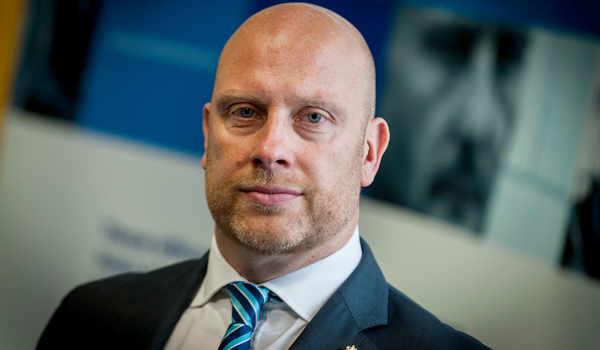
PFEW
The Police Federation of England and Wales described the review as a “watershed moment” for the service, urging the Government to fund reforms and warning policing cannot afford to lose any more experienced officers.
Deputy National Secretary Mel Warnes said: “This report confirms what we’ve been saying for years, and it must be a watershed moment for policing. Many of these recommendations aren’t new; they’re simply the product of finally listening to those at the sharp end of policing.
“If police bosses now accept the report’s recommendations, they must also accept responsibility for creating the conditions that made them necessary. We have lost too many outstanding leaders and future leaders because they’ve been overworked, underpaid and unsupported. The Home Secretary must now fund this vital change and require chief constables to implement it.”
Federation representatives met with the review team during the process and said evidence provided by frontline officers was recognised as a significant part of the final report.
Among the recommendations welcomed by the Federation are improved leadership training, stronger supervision, fairer promotion processes and clearer opportunities for career development.
The organisation has also backed proposals aimed at recognising and retaining experienced frontline officers, increasing national investment in leadership development and introducing a new rank of senior constable.
However, PFEW noted that questions remain around the practicality of fast-track leadership programmes if they do not provide officers with sufficient operational experience before promotion.
Concerns also persist on expanding direct-entry routes into senior policing roles. Leadership credibility is rooted in frontline experience and operational knowledge.
APCC
APCC Chair Emily Spurrell, chair of the Association of Police and Crime Commissioners said: “Strong and effective leadership is fundamental to defining any organisation, so we welcome the Police Leadership Commission’s work towards ensuring the best leaders with the right skills and standards are selected and equipped to deliver the high quality police service the public expects.
“While leadership starts at the top, the Commission has rightly recognised the importance of identifying and developing talented leadership at all levels of policing, and we support the idea of a root and branch modernisation of recruitment, training and performance monitoring. However, a greater emphasis should have been placed on driving improvement in the culture, ethics and inclusive leadership of forces.
“There are many great senior leaders in policing but there have been too many examples in recent years where the behaviour and actions of chief officers have been found wanting, and it is disappointing this is not addressed by the Leadership Review. Chief constables’ actions are highly consequential and where there have been allegations of misconduct, Police and Crime Commissioners and Deputy Mayors have demonstrated they have the authority and the tools to make sure those are properly investigated. If public trust and confidence is to be improved, it is vital the future policing model, both locally and nationally, retains robust and transparent public accountability.”
PSA
Police Superintendents’ Association President Nick Smart: “We welcome these recommendations, many of which align with the evidence and proposals we shared within our response to the call for evidence and in formal consultation events.
“It is right that the commission has overtly recognised the exceptional leadership demonstrated in many areas of policing, and the difficult context in which police officers work. We are in austerity and face a lack of funding, chronic under-resourcing, and rising demand.
“Senior leaders and politicians have allowed policing to become the service of last resort, picking up other agencies’ demand and taking vital resources away from the core role of policing. This leads to criticisms of leadership and the wider workforce when we don’t have the people to deal with the core policing that communities expect. Time and time again we have called for an urgent definition of the police mission to stop this from happening.
“Brilliant people are delivering excellent policing day in, day out, but for too long have been hampered by bureaucracy, inadequate and inconsistent training and development and most concerningly, toxic workplace cultures that leave officers at all ranks, including superintendents, unable to speak out or to challenge the actions of others. We have consistently raised these issues, but these ‘red flags’ have been ignored. We hope that through these recommendations and the clear evidence reinforcing our views, that they no longer will be.
“Many of our members do not have faith in promotion or appraisal processes. They tell us repeatedly that they lack transparency, and they speak of vast inconsistencies in the training and development on offer. Alongside this, superintendents, and their colleagues, are working dangerously long hours to keep up with the excessive demand placed upon them.”
IOPC
Rachel Watson, Director General of the Independent Office for Police Conduct, said: “I welcome the Police Leadership Commission report. It is an important, necessary area of work aimed at strengthening the ethos in policing. The IOPC was asked to contribute evidence and suggestions towards the report, including data relating to our investigations into chief officers. I understand it has helped underpin anecdotal evidence the Commission has heard.
“Police leaders set the culture for police forces so it’s vital the right people occupy chief officer positions, people with effective leadership skills and who come from diverse backgrounds, including experience away from policing. People should not reach chief officer ranks simply because their face ‘fits’.
“As the police complaints watchdog, we are uniquely placed to identify issues, and areas of concern, as well as ways to improve policing.
“I do believe most chief officers do a good job in challenging circumstances. However, too often when we investigate senior policing leaders we uncover longstanding, unreported concerns about their behaviour. Concerns need to be raised and heard long before someone is considered suitable for appointment to the Chief Officer rank.
“In order for this to happen, I believe forces need to improve protections for whistleblowers, so they feel able to speak out and listened to. We should not underestimate the challenges some offices and staff may feel in raising concerns. Building in additional protections and/or independence in the processes through which they raise their concerns may be useful.
“I also believe there needs to be more independent oversight of the appointment process for senior leaders, with consideration given for community representatives and people from outside policing to play a part in the recruitment process. And for candidates to gain experience in non-policing roles which would make them better rounded candidates for the top positions.
“The work of the Commission has the potential to deliver lasting change to police leadership and the IOPC will offer whatever support it can to this crucial area of policing.”