

Study exposes young men's blind spot on economic abuse
Nearly one in five young men do not recognise controlling a partner’s spending as a form of abuse, according to new research that exposes significant gaps in awareness of economic coercion among the age group most likely to be perpetrating it.
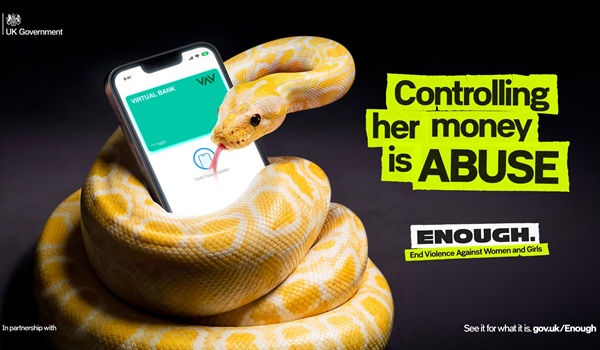
The findings, from an Ipsos UK survey of more than 5,000 adults commissioned by the Home Office and domestic abuse charity Surviving Economic Abuse, reveal that 19% of men aged 18–24 do not consider controlling how a partner spends their money to constitute abuse – three times the rate seen among men aged 45–54.
The same proportion of young men fail to recognise controlling access to a personal bank account as abusive, compared to just 3 per cent of older men. On taking out credit in a partner’s name without consent, younger men are four times less likely to identify the behaviour as abuse than their older counterparts, 16 per cent versus 4 per cent.
The research, published today, coincides with the launch of a new initiative by major UK banks to raise awareness of economic abuse, with Monzo, TSB, Metro Bank, Santander, Revolut and HSBC signing up to the government’s Enough campaign. Banking apps and selected branches will carry adverts highlighting four key forms of economic abuse: restricting someone’s ability to earn; running up debts in their name; controlling their money; and misusing payment references to harass them.
Banks are also rolling out technology to detect and block abusive messages sent through payment references, intercepting harm at the point of transaction.
Economic abuse is a criminal offence under the controlling or coercive behaviour provisions of the Serious Crime Act 2015, but it remains poorly understood and frequently missed, both by the public and, the data suggests, by some of those carrying it out. Domestic abusers use financial control to trap victims in dangerous situations, restricting their employment, running up debt in their names, and systematically dismantling their independence.
Sam Smethers, chief executive of Surviving Economic Abuse, said the findings were deeply concerning. “At a time when young women are experiencing the highest rates of economic abuse, it is deeply worrying that some younger men are less likely than any other age group to say these behaviours are abusive,” she said. “These attitudes matter because they shape what people think is acceptable in relationships.”
The campaign also draws on testimony from survivors. Ruth Dodsworth OBE, whose former husband was jailed for coercive control, described how financial restriction was used as a systematic tool of isolation. “My bank card vanished and was never replaced,” she said. “I even had to ask for money for my lunch, and only being given the exact amount in cash for a sandwich meal deal.”
Gabby, a young survivor who experienced economic abuse from the age of 17, said she had no idea at the time what was happening to her. “I didn’t recognise the warning signs because I had never been taught about economic abuse,” she said, adding that banks needed to do more to support victims once abuse was identified — including acting more swiftly to prevent long-term credit damage.
Overall awareness among the male population is higher than the youth figures suggest, with 94% of men able to identify at least one form of economic abuse. But only 58% of men — and 65% of all adults — correctly identified every behaviour in the survey as abusive.
Minister for Safeguarding and Violence Against Women and Girls Natalie Fleet said economic abuse was “just as devastating” as other forms of domestic abuse, even where it left no visible marks. “Controlling someone’s money, their work, or their independence is abuse. Plain and simple.”
The initiative forms part of the government’s broader strategy to halve violence against women and girls within a decade.