First lie wins
The murder of Henry Nowak has exposed a cognitive failure that has nothing to do with bad policing and everything to do with the exploitation of one of the most powerful and most underestimated forces in human decision-making.
On a warm Friday evening in August, while out on foot patrol in south London, a flash of movement caught the eye of PC Stephen Margiotta.
A black man was running directly towards him at high speed with three others close behind. Margiotta’s first assumption was that the man was fleeing the scene of a crime, so he moved to apprehend him, causing the two to collide and crash to the ground.
When they got up, Margiotta realised his shirt was covered in blood. The youth had been stabbed in the back and was bleeding profusely. But despite being badly injured, the young man got up and kept running. Margiotta gave chase, certain the man needed urgent medical attention.
“Some other people maybe thought I was trying to arrest him,” Margiotta later recalled. “They were saying, ‘What are you doing? Why are you chasing him?’ It all started from there.”
A radio call went out. Two other officers in a patrol van spotted the youth being loaded into a taxi and went to help. They quickly established the victim had a punctured lung, applied a sterile dressing and called for an ambulance.
But by now a crowd had built up and completely misread the situation before them. Shouts of “look, they’re killing him” echoed around the streets. Despite the officers’ best efforts to explain themselves, they were jostled, pushed aside and the injured youth pulled away.
Within minutes the crowd had grown to more than a hundred. Bricks and bottles were thrown. By the following evening, a full-blown riot was underway.
That was Brixton, 1981: the inciting incident that would result in three days of the worst civil disorder Britain had seen since the Second World War.
Both Margiotta and the crowd had fallen victim to what psychologists call anchoring bias – the tendency for the first piece of information we receive to create a mental reference point, an anchor, through which all subsequent information is filtered rather than evaluated afresh.
For Margiotta, his initial assumption that he was witnessing a crime dissipated the moment he realised the youth was injured. For the crowd, their initial assumption that they were seeing a racial assault persisted for the remainder of the weekend, inflamed by rumours that the young man had subsequently died.
Anchoring is one of the most robust and replicable findings in cognitive psychology. It operates in laboratories and on street corners, in courtrooms and custody suites, in the minds of students and the minds of experienced professionals. It’s not a policing issue, but rather a human one.
Forty-four years after the Brixton uprising, anchoring was in full force on the streets of Southampton in the immediate aftermath of the stabbing of Henry Nowak.
Attacked racially
Anyone who has seen the body-worn video footage of the tragic last moments of Henry’s life and wondered how officers could have thought to put him in handcuffs or how one could respond to the dying plea “I’ve been stabbed” with a simple “I don’t think you have mate”, has failed to understand just how powerful the cognitive science at play in such situations can be.
With an IOPC investigation into the actions of the officers underway, it would be wrong to speculate about their motivations, but the publicly available information is more than sufficient to paint a clear, highly detailed portrait of what took place. It’s also possible to see exactly where and when the anchors were set.
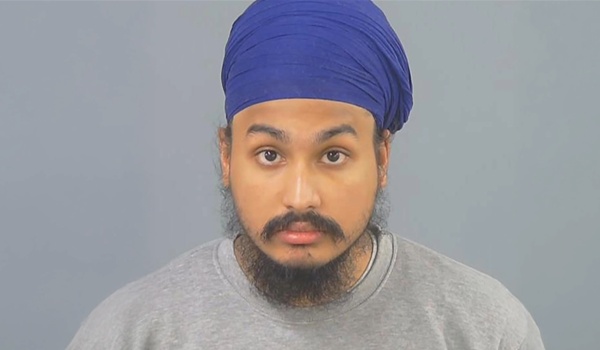
The first came at around 11.30pm that evening when Digwa’s brother, Gurpreet, called 999 and told the operator: “We just got attacked racially by some white person.”
It was a lie. Minutes earlier, Digwa had drawn a large Sikh dagger from its sheath and stabbed 18-year-old Henry – a first-year Southampton University student walking home after an evening out – five times.
Seven minutes after the 999 call, the first officers arrived and Gurpreet led them to where his brother was waiting. He pointed to his father who was holding Henry up against the wall of a house.
The father explained that Henry kept dropping to the side and had “a mouthful of blood.” Digwa interjected, explaining that the man had jumped over fences, fallen from a bin, slipped from a car bonnet. In doing so he provided a plausible explanation for why Henry was on the ground and in a state of distress.
Watching the footage, it’s all too easy to forget that criminals don’t usually wait around for the police to arrive at the scene of a stabbing and then proceed to calmly give their own version of events. Especially if their victim is still alive and potentially able to identify them.
And there is one crucial element that many seem to have completely missed: up until that point, officers had not merely been given no indication that a knife was involved. When specifically asked whether any weapons had been used, Gurpreet said “no, no, no”.
The commentary treating the statement “I don’t think you have mate” as evidence of negligence or indifference has it exactly backwards.
That reply is the endpoint of a chain that began with a 999 call describing a racial attack with no mention of a weapon, continued through a briefing before arrival, reinforced by the brother leading officers to the scene, maintained by the father’s account of Henry falling, and subsequent descriptions of bin-jumping, fence-climbing, and slipping. It was reinforced by the simple arithmetic of the scene: two brothers, one injured man, and every indication that Henry had come off worse in a fight.
By the time Henry said he’d been stabbed, the officer’s mental model simply couldn’t make sense of it. “I don’t think you have mate” was symptomatic of the fact that the anchor was set so completely and so early that the one true piece of information Henry was able to communicate couldn’t penetrate it.
In his sentencing remarks, Judge William Mousley KC was precise about this. The officers had been given a convincing but wholly false narrative. It was dark. The chest wound was not visible through Henry’s clothing.
The visible facial injury did not appear life-threatening. Henry’s complaints of being stabbed and struggling to breathe would not necessarily have indicated how serious the situation had become and, as the judge noted, courts have experience of people who have been arrested feigning injury in the hope of release. The officers, he said, were doing their best in a very difficult situation.
There is another layer to this case. Anyone watching the body-worn video footage today does so with knowledge the officers did not possess at the time. We know Henry Nowak has been stabbed. We know he is the victim. We know he will shortly die from his injuries.
Those facts become our own anchor. Every decision the officers make is then judged against information that was unavailable to them at the time. Hindsight can feel so obvious that we forget how uncertain the scene actually appeared to those experiencing it in real time.
Think horses
There is an old medical school aphorism, attributed to the American physician Theodore Woodward: when you hear hoofbeats, think horses, not zebras. In a diagnostic context, this means common explanations are usually correct.
Both that principle and its close philosophical cousin, Occam’s Razor – the simplest explanation is usually the right one – were operating on Belmont Road simultaneously. The anchor was in place and the simplest explanation for everything the officers could see and had been told was that the cooperative, upright, articulate man was the victim, and the distressed, bleeding man on the ground was the aggressor.
That explanation was also the most statistically probable one. In almost every conceivable version of that scene, it would have been correct.
Digwa didn’t just exploit a cognitive tendency. He engineered his false account around it. He made the lie the simplest available explanation for every observable fact. He dressed his zebra as a horse.
Consider a different scenario. You walk into a room. A man is on his back. There is a gunshot wound to his head. A gun is in his hand. Your immediate instinct is suicide – and in almost every case, that instinct would be correct.
Now consider a park in Canberra, Australia in February 1995, where first responders arrived to find a man with multiple shotgun wounds across a blood-spattered trail stretching 150 metres and half a dozen spent cartridges scattered across the ground. No matter how good the training, the idea that anyone’s first thought would be that this was a possible suicide is ridiculous. But that’s what it turned out to be.
Anchoring works both ways and it doesn’t care about the truth. It cares about the first available explanation.
Professor John Coxhead describes what he calls the deduction-induction spectrum – the range between forming a hypothesis early and testing it, and suspending judgement entirely while the evidence accumulates. Most investigators operate somewhere in the middle. But at the extreme deductive end, he notes, “you might have made your mind up before you get to a scene based on the type of incident you’ve been told it is.”
That is a precise description of what happened on 3 December 2025. The officers didn’t arrive at a neutral scene and form their own impressions. They arrived with a hypothesis already formed – delivered by a 999 call, reinforced by a briefing, maintained by every voice they encountered in the first seconds on Belmont Road.
As Coxhead puts it, the deductive paradox is this: “you find more and more about less and less, and in seeing more and more you may be seeing less and less.”
This is not a policing problem. It is a human problem. Doctors, pilots, military commanders, judges and journalists are all vulnerable to the same mechanism. The Brixton crowd in 1981 made precisely the same cognitive error that Digwa exploited in 2025 — a partial picture, a rapid conclusion, an anchor that no subsequent information could dislodge.
Powerful weapon
The officers who responded to Belmont Road heard hoofbeats and thought horses. In almost every conceivable version of that scene, that would have been the right call.
But Vickrum Digwa understood something that the public commentary has largely failed to grasp: that the most powerful weapon available to someone who wants to deflect blame is not violence or intimidation. It is a convincing first account, delivered before anyone can form their own impression.
The first lie wins. Not because officers are negligent or indifferent, but because human cognition under pressure does what human cognition has always done: it anchors.
The question for policing is not whether officers should have been smarter, wiser or less biased. It is whether systems can be designed that are robust enough to challenge the first story before it hardens into certainty.
Because there will be another Digwa. There will always be someone who understands that the first account is often the most powerful account.