
Watched, not led
The Metropolitan Police Service’s use of Palantir to identify internal risk has been defended as an early intervention tool. PFEW National Board Member Paul Matthews asks whether policing is increasingly turning to surveillance technology to solve problems rooted in leadership, culture and trust.
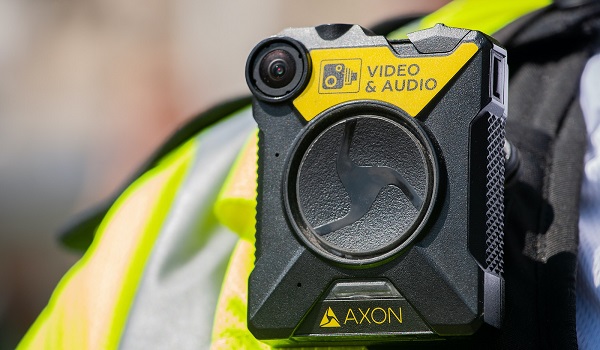
There is a difficult conversation developing in policing, and it cannot simply be reduced to whether technology is good or bad. The issue is more uncomfortable than that. It concerns what happens when a police service that has struggled with leadership, culture, supervision and trust begins to rely increasingly on surveillance technology to diagnose its own internal problems.
The Metropolitan Police Service has publicly confirmed that it is using technology, including a system developed with Palantir, to help identify professional standards, welfare and cultural concerns.
The stated intention is understandable. The Met has faced devastating scandals involving officers whose behaviour should have been identified and stopped far earlier. The murders, abuses and misconduct associated with officers such as Wayne Couzens and David Carrick exposed profound weaknesses in vetting, supervision, intelligence-sharing and organisational curiosity.
The Casey Review was clear that the Met had failed to manage the integrity of its workforce, missed warning signs, and had allowed unacceptable cultures and behaviours to persist within an organisation marked by defensiveness, denial and poor management. The Review found systemic and fundamental problems in how the Met was run, including poor management of people, inadequate supervision and an absence of clear systems, goals and workforce planning.
On one level, therefore, the case for better data integration is obvious. Policing holds large amounts of information about its own workforce, but too often that information sits in separate systems, files, teams or departments. A complaint here, an absence pattern there, a vetting concern somewhere else. Individually, these things may appear insignificant.
Collectively, they may tell a very different story. If technology can help identify risk earlier, prevent harm and remove genuinely dangerous officers from policing, it would be wrong to dismiss it out of hand.
In April 2026, the Met confirmed that its Palantir pilot enabled it, for the first time, to bring together data it already lawfully held in one place to identify potential standards, welfare and cultural concerns, describing this as an early identification and prevention approach.
Earlier, in February 2026, the Met had confirmed the use of AI tools to analyse internal sickness and absence data, with the software identifying patterns that might appear innocuous in isolation but could indicate misconduct when aggregated. Reported data points included access to unrelated files, changes in financial circumstances and high numbers of public complaints, regardless of whether those complaints were upheld.
Identify risk
The Guardian subsequently reported that the tool had been used over a one-week period, leading to investigations into hundreds of officers for issues ranging from work-from-home breaches to suspected corruption and criminal allegations, including arrests for alleged abuse of authority for sexual purposes, fraud, sexual assault and misuse of police systems.
Commissioner Sir Mark Rowley defended the approach by arguing that bringing together lawfully held information allows the Met to identify risk earlier, act faster and be fairer and more consistent.
That argument has merit. But the deeper concern is not whether policing should use data. It clearly should. The concern is whether surveillance is now being used to compensate for failures in leadership. That is a very different proposition.
The use of Palantir-style analytics within policing must be understood against a wider organisational context. Officers are not working in stable, well-resourced, highly trusted environments. They are working in conditions of intense demand, low morale, exhaustion, cancelled rest days, rising attrition and deepening internal distrust.
Practitioner accounts have referred to around a quarter of a million re-rostered rest days held on Met systems and approximately 20,000 cancelled rest days each month to meet current demand. If accurate, these figures suggest a force operating beyond sustainable capability. Cancelled rest days mean lost family time, reduced recovery, cumulative fatigue and weakened psychological resilience.
They are not simply administrative data. They are evidence of organisational strain being absorbed by officers, their families and their private lives. Officers are not simply underperforming within a stable system; in many cases they are maintaining service delivery through repeated personal sacrifice.
That matters because surveillance does not land neutrally in such an environment. When officers feel valued, supported and fairly treated, scrutiny can be understood as necessary professional accountability. When they feel mistrusted, exhausted and ignored, the same scrutiny can feel punitive. It can appear less like support and more like suspicion.
This is where the concept of fractious leadership becomes useful. Fractious leadership describes a pattern of organisational conduct that is fragmented, reactive, defensive and often disconnected from the lived experience of frontline work.
It is not simply poor leadership by individuals, but a wider organisational pattern in which competing demands, performance anxiety, reputational fear and political pressure produce leadership responses that are controlling rather than relational. In such environments, leaders often reach for dashboards, audits, technology and compliance systems because these appear measurable and defensible.
In that context, technology becomes attractive because it appears decisive. It produces outputs. It generates flags. It gives the impression that something is being done.
But police culture cannot be repaired by software alone.
Morally consistent
Culture is not simply a collection of behaviours waiting to be detected by an algorithm. It is produced through everyday relationships, supervision, fairness, belonging, informal learning and leadership visibility. It is shaped by whether officers feel they can speak honestly. It is shaped by whether line managers have time to supervise properly.
It is shaped by whether welfare concerns are treated as human issues or performance problems. It is shaped by whether senior leaders are seen as credible, operationally literate and morally consistent.
This is where the current debate around Palantir becomes so important. A system that aggregates complaints, sickness data, misconduct records, access logs, financial changes or working patterns may identify genuine risks.
It may also identify people who are exhausted, traumatised, disabled, overworked, unsupported or simply administratively unlucky. A high number of public complaints may indicate a problematic officer. It may also indicate an officer working in a high-risk proactive environment. Sickness patterns may indicate avoidance.
They may also indicate trauma, caring responsibilities or burnout. Financial changes may indicate vulnerability to corruption. They may also indicate divorce, childcare costs or the ordinary pressures of life.
The ethical issue is not just what the system can see. It is how the organisation interprets what it sees.
There is an obvious danger in collapsing welfare indicators into misconduct indicators. If officers believe that sickness, stress, personal vulnerability or fatigue may be fed into systems that generate suspicion, they may become less willing to disclose problems early. A technology introduced in the name of prevention could actually drive risk underground. There is also a broader behavioural concern.
Constant visibility encourages self-regulation. In workplaces, electronic monitoring has been consistently linked to stress, reduced autonomy and diminished trust. In policing, where discretion, courage and judgement matter, excessive surveillance may produce defensive policing.
Officers may avoid proactive work, hesitate in ambiguous situations, over-document routine decisions or prioritise bureaucratic self-protection over public service. A system designed to improve standards may, perversely, reduce confidence, initiative and performance. Good officers may conclude that the safest course is to do less, avoid risk and keep their heads down. That does not serve the public.
Fairness matters
Organisational justice research is central to understanding why this matters. Officers’ perceptions of fairness, voice and respectful treatment shape their trust in the organisation and influence how they behave towards the public.
Fairness matters because it shapes the psychological contract between officers and the organisation they serve. Officers are more likely to accept scrutiny when they perceive it as fair, transparent, proportionate and linked to genuine improvement. They are less likely to accept it when it appears opaque, punitive or selectively applied.
Internal procedural justice affects officer attitudes towards the public, support for community policing and willingness to engage in procedurally just behaviour. When officers feel the organisation treats them unjustly, the consequences extend beyond the workforce itself — they affect the quality and legitimacy of the service delivered to the public.
The retention data makes this concrete. Home Office workforce statistics for the year ending March 2025 show that voluntary resignation was the most common reason for officer leavers, accounting for 53.1 per cent of departures.
Research into why officers leave consistently identifies lack of voice, lack of recognition, organisational inflexibility and poor support as key drivers — not the difficulty of the work itself. Studies have found that resigning officers often valued policing as a vocation but were frustrated by the organisation’s inability to manage demand, support officers and provide voice, autonomy and leadership.
Organisational inflexibility around health, disability, childcare and part-time working has also been identified as a significant factor. Officers are not necessarily leaving because they dislike policing. Many are leaving because they feel policing no longer likes them back.
This is where leadership resentment becomes important. Leadership resentment develops when officers believe senior leaders are more concerned with reputation, optics and public messaging than with the welfare and reality of frontline officers.
It is sharpened when officers perceive that leaders can find millions of pounds for new software, consultancy and transformation programmes, yet struggle to fund basic operational resilience, supervision, equipment and welfare.
The issue is not hostility to modernisation. Officers know policing needs better systems. The resentment arises when technology appears to be funded more readily than people.
The Met’s Connect system illustrates the problem. Intended to modernise records and case management, its original budget of £171 million rose to a final approved value of £334 million. The Met’s own Force Management Statement acknowledged that embedding Connect could slow aspects of crime recording and investigation while officers adapted to the system. For frontline officers, this creates a bitter irony.
Deserves scrutiny
They are told resources are scarce and rest days must be cancelled, yet large sums appear available for systems that do not always make the job easier. The symbolic impact of this should not be underestimated.
Against a backdrop of chronic overload and cancelled leave, expensive technology that initially makes work slower and more frustrating is not experienced as investment in policing. It is experienced as investment in everything except the people doing the job.
The commercial dimension also deserves scrutiny. Palantir is not merely a neutral technical provider. It is a powerful private technology company with a controversial public profile and expanding involvement in sensitive public-sector data environments.
The Guardian reported in April 2026 that more than 200,000 people had signed petitions urging ministers to end public contracts with Palantir, with the company holding UK public contracts worth around £600 million.
Reports also indicated that talks were underway that could significantly expand Palantir’s role in law enforcement, including automating intelligence analysis in criminal investigations. Internal concerns have been raised about allowing a controversial US company to process highly sensitive intelligence data, including victims’ personal information.
One source was quoted as saying that the force did not need “£100m AI” but needed basic existing systems to work properly.
That sentiment captures a wider cultural concern that some of policing’s most persistent failures are also becoming commercial opportunities.
Misconduct becomes a market for integrity analytics. Workload becomes a market for automation. Reform becomes a market for consultancy. Fragmented data becomes a market for platform integration. Each may offer real benefits, but the wider pattern is troubling.
Forces that cannot fund ordinary policing can sometimes find considerable money for the latest software. A public service struggling to meet demand may become dependent on external providers whose commercial interests do not necessarily align with public value, officer wellbeing or democratic legitimacy.
There is also the problem of algorithmic injustice. Data-driven systems can create the appearance of objectivity, but they are only as fair as the data, assumptions and organisational practices behind them. Policing data is never socially neutral.
It reflects deployment patterns, complaint cultures, managerial priorities and historic inequalities. The Casey Review found evidence of institutional racism, misogyny and homophobia within the Met, including concerns about systemic racial bias in misconduct processes.
If historical data shaped by unfairness is used to generate future risk indicators, there is a real danger that technology may reproduce the very inequalities it is supposed to help resolve — this time under the appearance of algorithmic objectivity.
Officers in proactive roles may attract more complaints because of exposure. Officers dealing with trauma may show sickness patterns. Officers with disabilities or caring responsibilities may trigger absence indicators. Without careful human interpretation, such systems risk confusing vulnerability with misconduct.
Public value theory is helpful in framing the overall problem. A reform may be technologically attractive and politically defensible, but still fail if it lacks internal consent or damages the organisational relationships on which effective policing depends. In policing, officers are not simply delivery units. They are moral agents, legal actors and carriers of institutional culture.
A technology programme that claims to restore public trust while undermining internal trust may therefore undermine its own purpose. Internal trust and external legitimacy are not separate concerns. They are connected. Officers who feel unsafe, unsupported and mistrusted are less likely to display the confidence, patience and procedural fairness expected in public encounters.
Organisational evidence
That does not mean technology should be abandoned. It means it must be governed carefully, transparently and relationally. Analytics should be a tool for human judgement, not a replacement for it. Risk flags should trigger curiosity, not conclusions. Some cases will require misconduct action. Some may require welfare intervention. Some may reveal poor supervision. Some may expose excessive workload. Some may show that the organisation itself is creating risk.
This is the crucial point. The same data used to identify problematic officers could also identify problematic systems. If officers are repeatedly sick, exhausted, moved, cancelled, overworked and unsupported, that should not merely be read as an individual performance concern. It should be read as organisational evidence.
If a team has high complaints, high sickness and poor outcomes, the question should not only be which officer is the problem. It should also be what this environment is doing to people.
A legitimate model of technological oversight would therefore need clear safeguards. Officers should know what data is being used, why it is being used and how decisions are reviewed. Automated outputs should never be treated as proof.
Welfare data should be separated carefully from misconduct data. Staff associations should have meaningful oversight. Independent ethics scrutiny should be built in from the start. Procurement should be tested against public value, not just political urgency. Most importantly, investment in surveillance must be matched by investment in supervision, wellbeing, workload management and frontline resilience.
The Met, and policing more broadly, must remove those who abuse power. There should be no ambiguity about that. Predatory, corrupt, discriminatory or criminal officers have no place in policing. Public trust depends on the service being able to identify and act against them. But moral clarity cuts both ways.
A service that rightly pursues misconduct must also protect officers who serve honourably under intolerable pressure. It must distinguish between corruption and exhaustion, between misconduct and vulnerability, between risk and need.
Without fear
The danger is that policing creates a panoptic workplace, constantly watched, rarely trusted and increasingly unsupported, while external providers profit from the instability. Such a system may identify some bad officers, but it may also accelerate the departure of good ones who no longer feel safe, valued or understood. Surveillance may help find the bad apples, but poor leadership, under-resourcing and commercialised reform risk damaging the orchard itself.
Fractious leadership is not solved by better software. It is solved by rebuilding the relationship between leadership and the workforce. This requires visible senior leaders who understand operational reality, first-line supervisors with the time and training to lead properly, fair workloads, honest demand management and a culture in which officers can speak without fear.
The real challenge is not whether policing should use Palantir or similar technology. The real challenge is whether policing can use technology without allowing it to become a substitute for leadership. Data can assist integrity. It cannot provide belonging. Algorithms can identify patterns.
They cannot build trust. Systems can flag risk. They cannot replace the sergeant who knows their team, the inspector who understands demand, or the senior leader willing to listen before imposing another solution from above.
Policing does not need to choose between accountability and care. It needs both. But if internal surveillance expands while internal trust collapses, the service may find itself solving one legitimacy crisis by creating another.
The future of police reform should not be a choice between doing nothing and watching everyone. It should be about building organisations where misconduct is identified early, welfare is taken seriously, supervision is properly resourced, technology is ethically governed and leadership is relational enough to understand the difference.
That is the real test. Not whether policing can see more, but whether it can finally lead better.
Paul Matthews is studying for a PhD in police leadership at De Montfort University