

‘Inconsistencies’ in how police and agencies respond to children affected by domestic abuse, inspectorates warn
Children affected by domestic abuse are not being consistently recognised as victims, according to a new joint report.
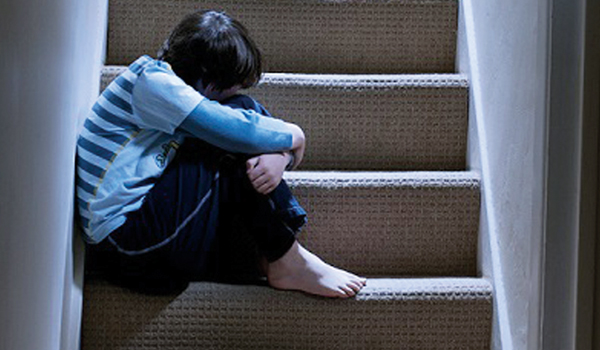
It found “inconsistencies” in how local agencies and partnerships, including the police, identify and support these children.
Jointly published by Ofsted, the Care Quality Commission (CQC), His Majesty’s Inspectorate of Constabulary and Fire and Rescue Services (HMICFRS), and His Majesty’s Inspectorate of Probation (HMIP), the report found children were often overlooked as victims of domestic abuse by the police, social care and health services, despite introduction of the Domestic Abuse Act in 2021.
The four inspectorates jointly carried out inspections across six local authority areas to look at the response to children who are at risk from, or are victims of, domestic abuse. Inspectors considered support provided across local partnerships and services, including children’s social care, health services, police, youth justice services and schools.
The report follows on from a joint targeted area inspection (JTAI) carried out in 2017 on the multi-agency response to children living with domestic abuse. The Domestic Abuse Act 2021 recognises children as victims of domestic abuse if they have seen, heard or experienced the effect of the abuse.
But the latest report finds that practice across police, health and social care services in some local areas remains “focused on adults’ needs and risks, and is insufficiently focused on the needs and risks of children”.
The report also warns of “significant variation” in how well children’s experiences are captured and how clearly the risk posed by perpetrators of domestic abuse is understood and managed by children’s services, police and probation services.
In some local areas, there is insufficient training for professionals, such as the police and social workers, on domestic abuse and its impact on children, and the understanding of coercive control is particularly limited. This means children do not always get the right help and protection at the right time.
Information held by different agencies about children, adult victims and perpetrators is not always systematically shared or drawn together by the network of professionals involved with children. Concerningly, this limits professionals’ ability to form a complete picture of the risks posed to children, the inspectorates said.
They did find examples of “excellent practice” in some local areas and by individual practitioners. The report highlights strong practice in relation to unborn babies, with midwives demonstrating professional curiosity, awareness and knowledge of the potential risk of domestic abuse. Schools and early years providers were also found to play a critical role in supporting and protecting children.
The report states that the Children’s Wellbeing and Schools Bill, with its increased focus on early help, stronger multi-agency responses to child protection, and better information sharing across agencies, is an opportunity to make systemic improvements to protect children.
The six local areas inspected were Hertfordshire, Hillingdon, Norfolk, North Yorkshire, Reading, and Redcar and Cleveland.
Michelle Skeer, His Majesty’s Inspector of Constabulary: said: “Domestic abuse can devastate the lives of children, and it is vital that they are recognised as victims in their own right. An effective multi-agency response is essential to keep children safe.
“While we found a clear commitment and dedicated work by many frontline officers and staff, children’s experiences were not always captured or reflected in police reports or safeguarding referrals.
“And it was disappointing to find inconsistencies in how well the risk posed to children by domestic abuse perpetrators is understood and managed, as well as gaps in how police actions are shared with partner agencies such as children’s social care and schools. This undermines collective safeguarding efforts.
“Protecting children must remain a priority, and through our inspections, we will continue to monitor progress and support improvements in this important area.”
Yvette Stanley, Ofsted’s national director for children’s social care, said: “It’s shocking that one in seven children in the UK will have lived with domestic abuse at some stage in their lives. Protecting and supporting children at risk of domestic abuse needs to be viewed as a priority for society and for all services who work with children.
“Although we saw some positive work to support children affected by domestic abuse, it is worrying that we did not find more consistent improvements since our last JTAI. There must be a greater focus on recognising children as victims in their own right, and urgent improvements need to be made so that local agencies and partnerships can better support children affected by this type of abuse.”
Lucy Harte, deputy director of Multagency Operations for Primary and Community Care at CQC, said: “This report highlights that, despite being established in law, children affected by domestic abuse are not being consistently recognised or supported as victims. The wide variation in how local agencies identify risk, share information, and respond to children’s needs, unfortunately leave some children without the protection and help they require.
“The examples of good practice in the report show that stronger strategic multi-agency working, information sharing and clear governance mean that children at risk are more likely to receive effective early intervention and safeguarding.”
Martin Jones, Chief Inspector of Probation said the report shows there is “still much to do”.
“Throughout these inspections we were pleased to recognise some good probation partnership practice, however, there is still much to do,” he said. “We found the probation service’s contribution to the multi-agency approach is variable, and that insufficient coordination was leaving children without effective protection.
“The findings show the probation service is not consistently realistic about what can be – and is being – delivered, and more attention must be paid to the risks posed to children in order to avoid safeguarding opportunities being missed.”