

Psychological damage among officers heightened by poor working conditions
A nationwide study of more than 12,000 police officers suggests rates of trauma-related mental disorders are “exacerbated by poor working conditions”, such as too little time and a lack of support dealing with difficult situations.
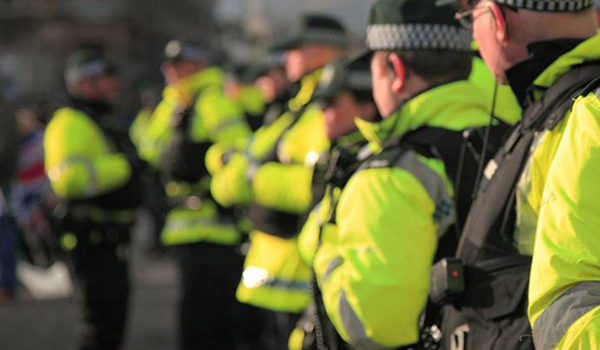
This can result in high levels of post-traumatic stress disorder (PTSD) or complex PTSD (C-PTSD) across police forces, according to a study led by the University of Cambridge.
However, officers who say they feel supported by colleagues, and have a sense of doing meaningful work, had around half the rates of a form of PTSD as the national average for policing staff.
Figures show 13,263 officers were absent due to stress, depression, anxiety or PTSD in the past financial year, compared with 8,450 the year before.
Police Federation of England and Wales (PFEW) wellbeing lead Sue Honeywill says one in five officers have PTSD, and “an overwhelming majority” have experienced a traumatic incident at some point during their career, which undoubtedly has a significant impact on their mental health.
Researchers behind the study say their findings suggest that simple improvements to the working lives of police – scheduled time for support from peers and supervisors, for example – could dramatically reduce the level of psychiatric problems in UK forces.
In a previous 2018 study, sociologists surveyed thousands of police personnel across the country and found that 12 per cent showed clinical symptoms of C-PTSD, a chronic condition in which repeated trauma exposure causes social disconnection, feelings of worthlessness, and an inability to regulate emotions.
C-PTSD often leads to ‘burnout’ and substance abuse, say researchers. In fact, 90 per cent of police workers in the original survey study ‘The Job, The Life’ had experienced trauma, and one in five of these reported symptoms of either PTSD or C-PTSD.
Now, the same team of researchers have analysed survey data provided by 12,248 serving police officers to determine the working conditions and on-the-job situations with the strongest links to C-PTSD.
Trauma detailed by officers with probable levels of C-PTSD included dealing with fatal car accidents, rapes, homicides, suicides – including of children – and drug overdoses.
Exposure to physical violence made little difference to rates of C-PTSD, nor did long working hours, researchers found.
However, officers who described it as “very difficult” to take time away from the job for personal or family matters had C-PTSD rates more than 50 per cent higher than the UK-wide average for police.
Those who described their relationship between work and personal life as “not fitting well at all”, some 15 per cent of police officers in the study, had twice (24 per cent) the average policing rates of C-PTSD.
One officer suffering with probable C-PTSD described how what you see “impacts on your life outside of work”, offering the example of cases involving dead children that “make you anxious about your own children’s wellbeing. To a degree you lose your innocence.”
Another C-PTSD sufferer said “it is a given and accepted” that the job means exposure to trauma, and describes the occupational health team in their force as “brilliant” but few in number.
“They are only able to put ‘sticky plasters’ on, and send the officers back out,” the officer said.
Police officers who described never having enough time to “get the job done” had almost double the rates of C-PTSD as the average across UK forces, 22 per cent compared with 12 per cent, as did officers who reported experiencing sexual harassment – whether from the public or colleagues.
Officers who said they could never rely on the help and support of colleagues were most likely to suffer with Complex PTSD, with more than 43 per cent displaying symptoms, but such claims were relatively rare, the study found.
One detective with C-PTSD symptoms recounted dealing with sexual abuse cases as the sole investigating officer: “Little or no support from management. Victims hanging all their hopes and pressures on me.”
By contrast, C-PTSD rates were just seven per cent among those who said they could always rely on colleagues, and just six per cent among those who say they regularly get a feeling of a job well done, with researchers claiming that a sense of meaningful work may provide a “protective effect” mentally.
“Our research shows that the debilitating psychological misery often caused by trauma exposure isn’t an inevitable part of the difficult job of policing, it is exacerbated by poor working conditions,” said Professor Brendan Burchell, lead author from Cambridge’s Department of Sociology.
The team also conducted analyses beyond individual officers to compare forces, revealing a strong link between “work intensity” – those forces with more officers reporting a lack of time to effectively police – and increased rates of C-PTSD.
Of 18 anonymised UK police forces, the one with the highest reported time constraints among officers had C-PTSD rates of 29 per cent, well over double the average for the overall policing population.
“Severe austerity cuts since 2010 leading to a marked reduction in police numbers without a decrease in the demands of the job inevitably creates more time pressure for remaining officers,” said Professor Burchell.
“Single-crewing, shift work and fewer resources mean that time for encouraging words between colleagues or space for officers to acknowledge their traumatic experiences are few and far between.”
One officer with probable C-PTSD described being “single crewed” at a rural location for a year, with nearest support almost an hour away. Another spoke of going from a shift team of five to working alone: “My coping strategy of being around colleagues who had been to the same fatal accident or suicide was taken away from me.”
Cambridge co-author Dr Jessica Miller, who is also director of research for Police Care UK, the charity that funded the research, added: “The police forces reporting the best working conditions had much lower rates of PTSD. Modest investments to improve their working conditions could see significant reductions in psychological problems among police officers.”
The PFEW says “hundreds of its members” have been provided with life-changing mental health support from specialists.
It has funded the Welfare Support Programme (WSP), which offers a wide range of confidential and independent services from clinical assessments to counselling with fully trained and accredited professionals.
“At least 500 members are being given timely, ongoing support from Defence Medical Welfare Service (DMWS), which has provided provisions of the WSP since December 2020,” said the PFEW.
DMWS is an independent charity providing medical welfare to the Armed Forces, veterans, NHS staff and emergency services.