

Failure to investigate compromised Claudy bombing investigation
The decision not to fully investigate an implicated priest compromised the Royal Ulster Constabulary (RUC) investigation into the Claudy bombing in County Londonderry in 1972, a Police Ombudsman report has revealed.
The decision not to fully investigate an implicated priest compromised the Royal Ulster Constabulary (RUC) investigation into the Claudy bombing in County Londonderry in 1972, a Police Ombudsman report has revealed.
The Claudy bombing on July 31, 1972, killed nine people and injured 30 others. The report, published this week, suggests the priest implicated, Father James Chesney, was believed to be a member of the IRA and that all opportunities to arrest and interview suspects were missed.
The report examines information held by the RUC and correspondences with the Government. The Police Ombudsman concluded that for senior police officers to have had the weight of intelligence and information that they had pointing to Father Chesneys possible involvement in terrorism and not to have pursued lines of inquiry, which could potentially have implicated or eliminated him from the investigation, was wrong and compromised their investigation into the Claudy bombings.
The Police Ombudsman found no evidence that police had information which, if acted upon, could have helped them to prevent the bombings, but confirmed that following the bombing police held extensive intelligence and other material from a variety of sources which implicated the priest as the IRAs director of operations in South Derry and was alleged to have been directly involved in the bombings and other terrorist incidents.
The Police Ombudsman found that requests to arrest Father Chesney had been refused by the assistant chief constable of Special Branch, who had advised that matters are in hand. A correspondence between the assistant chief constable and a Northern Ireland Office (NIO) official revealed that Father Chesney was known to be dangerous, had been lectured on his behaviour and an effort was being made to transfer him to another parish.
Father Chesney was subsequently appointed to a parish in County Donegal in late 1973. He was never again appointed to a parish in Northern Ireland. Church records indicate that when questioned by his superiors he denied involvement in terrorist activity. As a result of the course of action police had taken, his denial was never tested. He died in 1980.
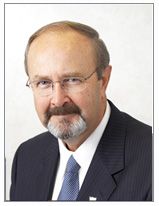
The RUCs decision not to further investigate Father Chesney compromised the investigation, failed those who were murdered, injured and bereaved in the bombing and undermined police officers working on the investigation, Police Ombudsman Al Hutchinson said.
I accept that 1972 was one of the worst years of the Troubles and that the arrest of a priest might well have aggravated the security situation. Equally, I consider that the police failure to investigate someone they suspected of involvement in acts of terrorism could, in itself, have had serious consequences.
In the absence of explanation, the actions of the senior RUC officers, in seeking and accepting the Governments assistance in dealing with the problem of Father Chesneys alleged wrong doing, was by definition a collusive act.
I am satisfied that the same situation would not be repeated today. Rigorous procedural laws, checks and balances, media scrutiny and offices such as that of the Police Ombudsman would ensure that similar actions could not occur without proper accountability.
Secretary of State, Owen Paterson, said he is profoundly sorry that the matter wasnt fully investigated and that the victims and their families have been denied justice.
The Police Ombudsmans investigation formally began in late 2002, following a statement by the Police Service of Northern Ireland (PSNI), which said that the RUC had information which indicated that a priest was an active member of the IRA and was involved in the bombing of Claudy. The statement said that the Secretary of State at the time, the Right Honourable William Whitelaw, and Cardinal William Conway had discussed the priest.